2022 Maryland Small Grain Variety Trials

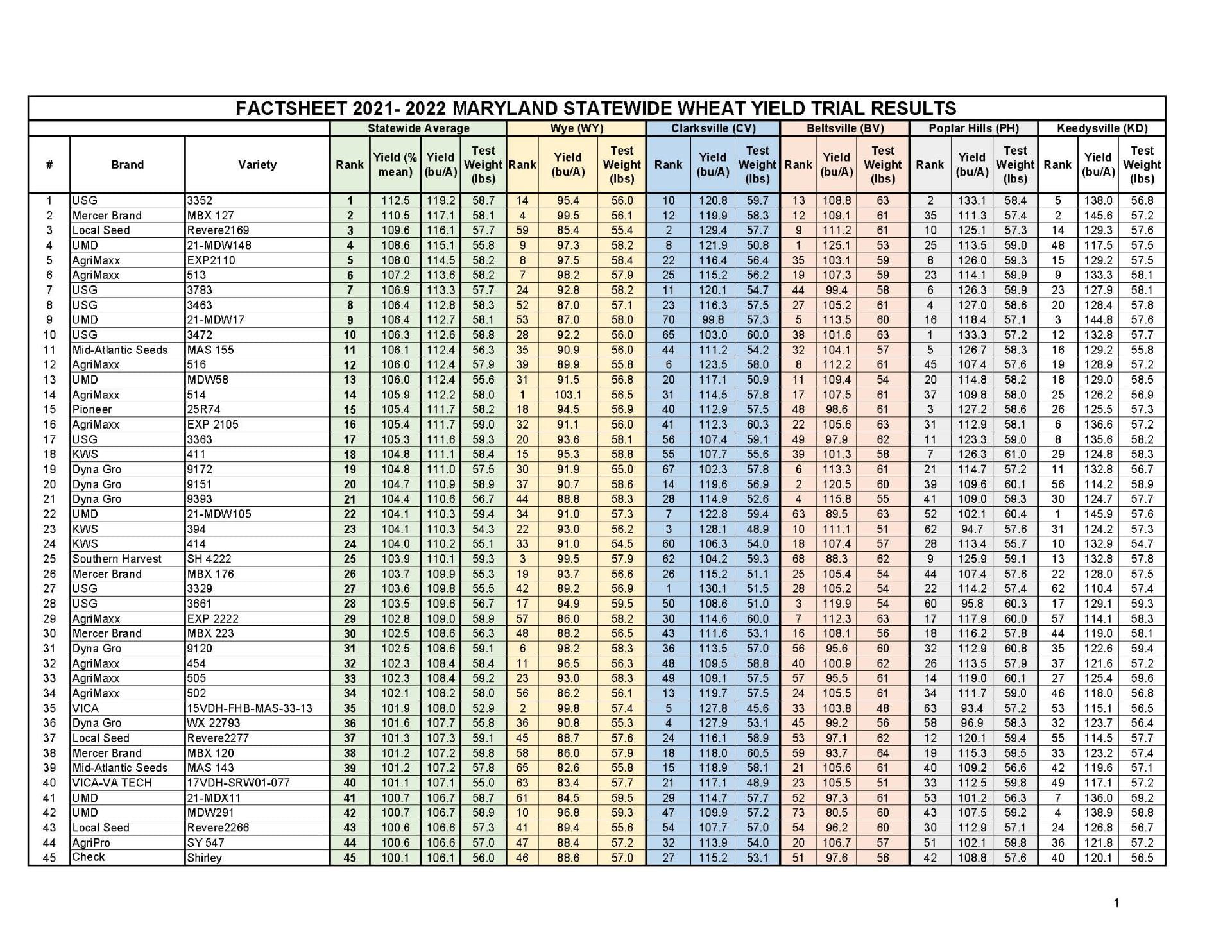
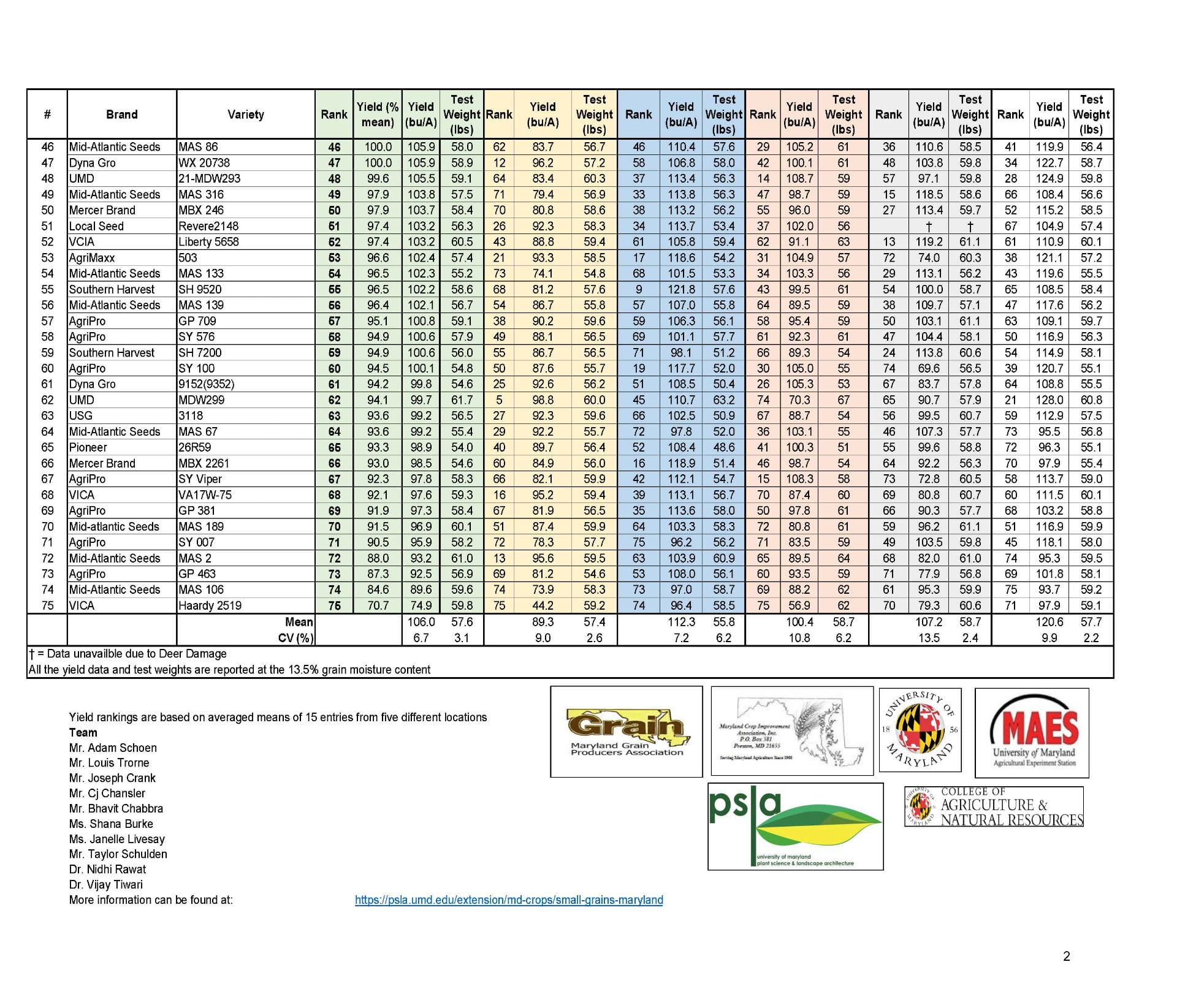
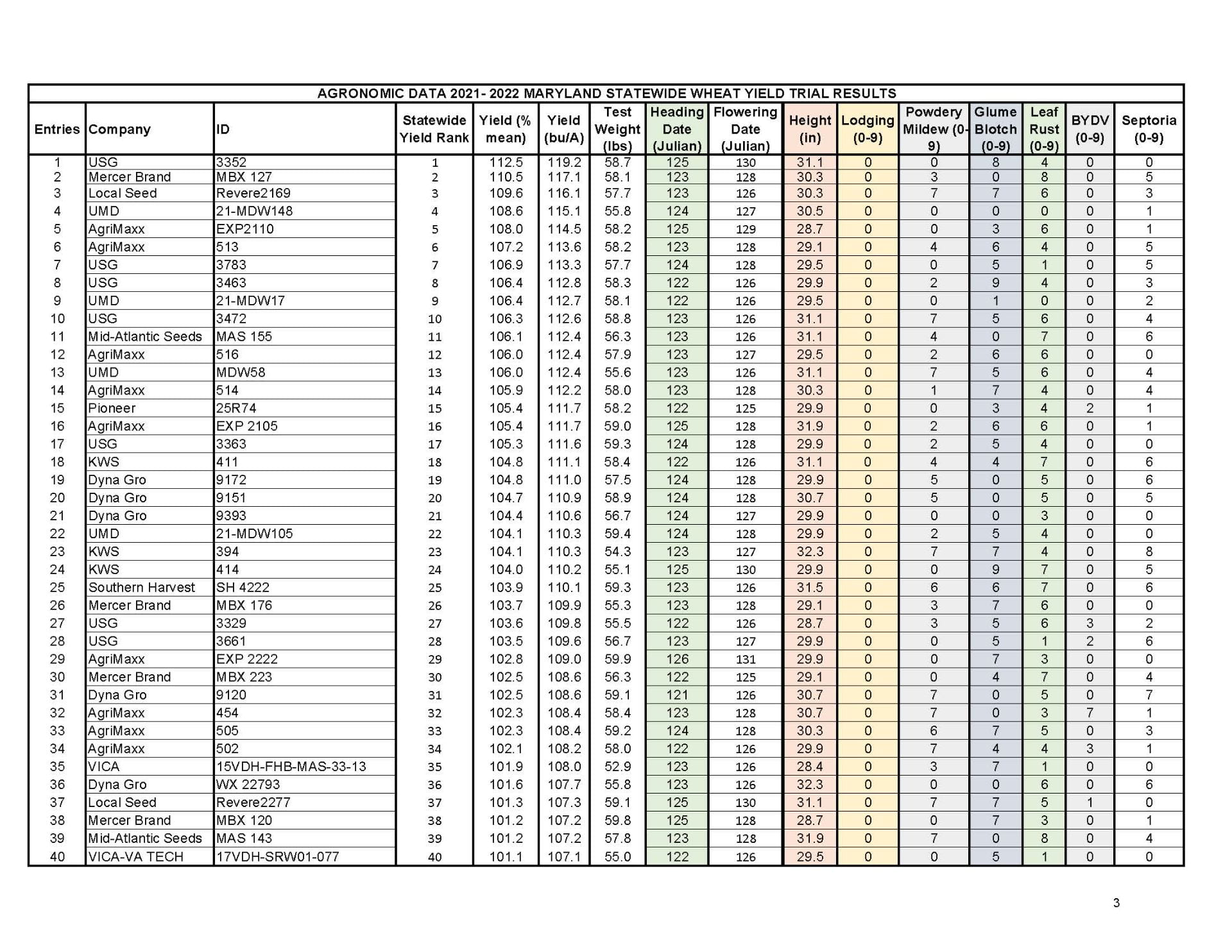
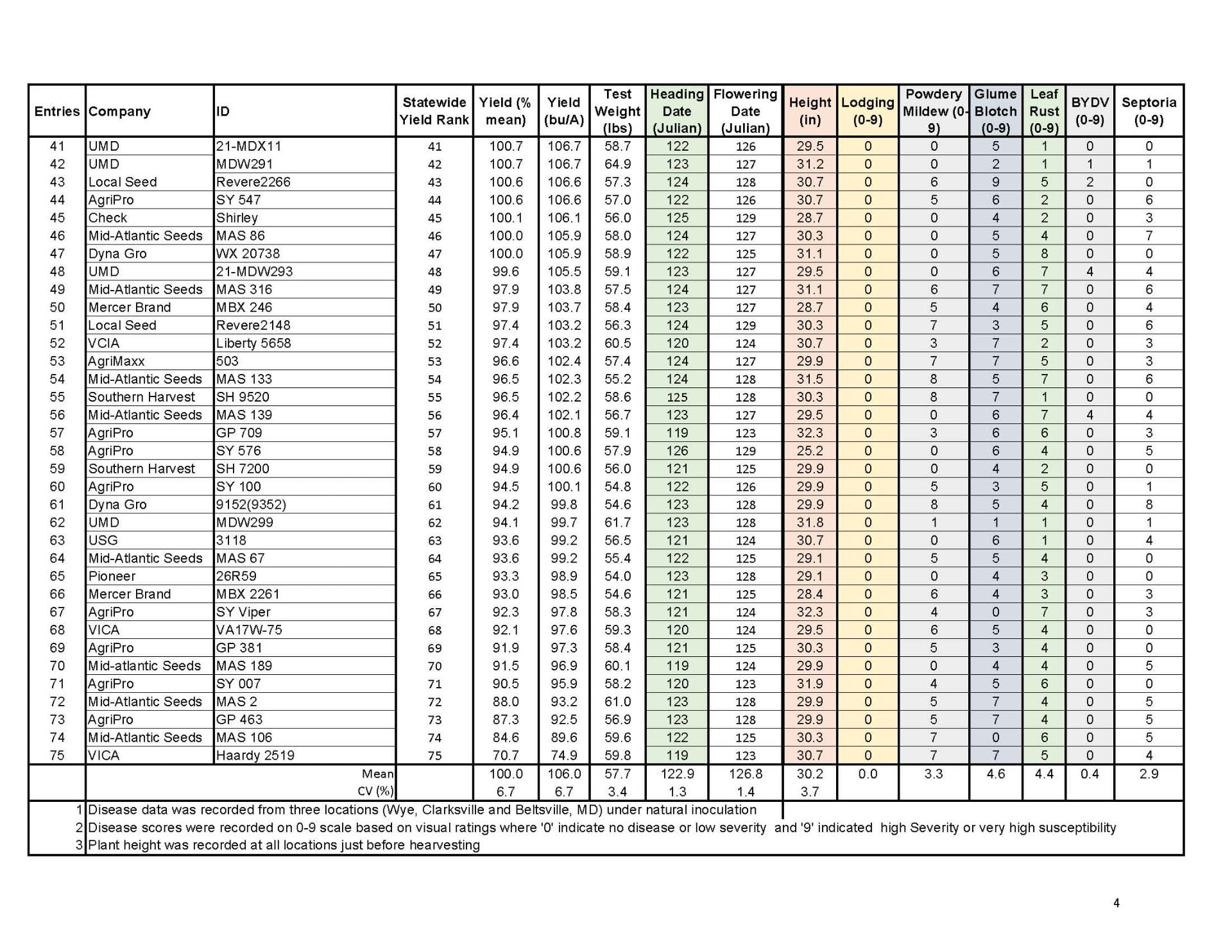
Results from the University of Maryland Small Grain Variety Trials are in the tables below. To download a pdf copy of the report, click here.

University of Maryland also rates the relative susceptibility of select varieties of wheat and barley to Fusarium head blight. The results from this trial can be found here.

For questions regarding the small grain trials, contact Dr. Vijay Tiwari (vktiwari@umd.edu) or Dr. Nidhi Rawat (nidhirwt@umd.edu).

If you’d like to learn more about how to interpret variety trial data, view our fact sheet by clicking here.

Click to Download The 2022 Small Grain Variety Trials

Click to Download 2022 Wheat and Barley Disease Ratings

June 2022 Grain Market Summary

Dale Johnson, Farm Management Specialist
University of Maryland

Information from USDA WASDE report

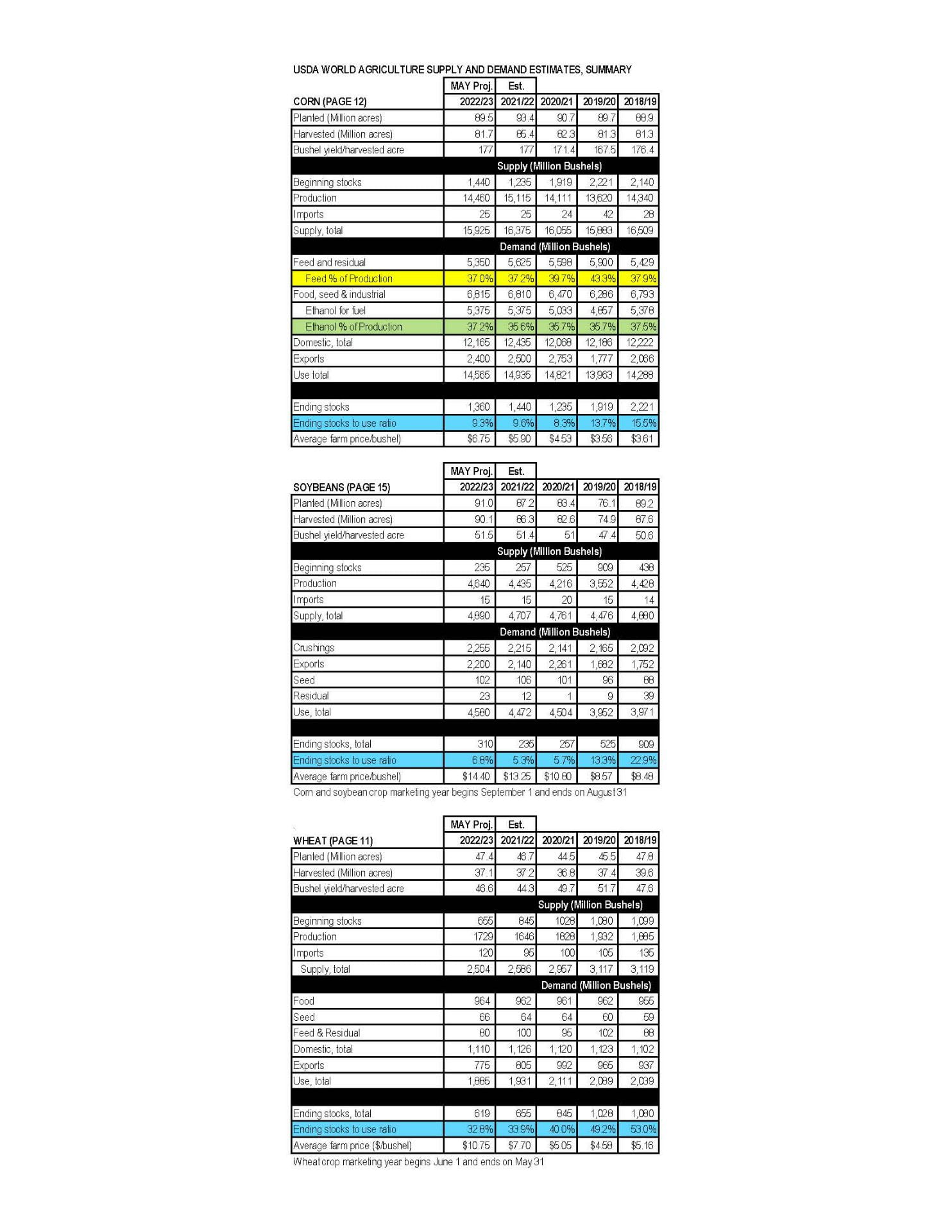
Attached is the summary for the June 2022 WASDE.

Corn

This month’s 2022/23 U.S. corn outlook is for larger beginning stocks, slightly higher use, and increased ending stocks. Corn area and yield forecasts are unchanged. USDA will release its acreage report on June 30, which will provide survey based indications of planted and harvested area. Beginning stocks are up 45 million bushels mostly reflecting a forecast decline in exports for 2021/22. Exports are lowered 50 million bushels, based on reported U.S. Census Bureau shipments through the month of April and export inspection data for the month of May. Food, seed, and industrial use (FSI) is raised 5 million bushels as projected increases in the amount of corn used for glucose and dextrose and starch is partially offset by a decline in high fructose corn syrup. These FSI use changes are carried through for 2022/23. With no other 2022/23 use changes, ending stocks are raised 40 million bushels. The season-average farm price received by producers is unchanged at $6.75 per bushel.

Soybeans

This month’s U.S. soybean supply and use projections for 2022/23 include lower beginning and ending stocks and higher prices. Lower beginning stocks reflects increased exports for 2021/22. Soybean exports for 2021/22 are raised 30 million bushels to 2.17 billion reflecting strong export sales and a reduced export forecast for Brazil. With reduced supplies for 2022/23 and no use changes, soybean ending stocks are projected at 280 million bushels, down 30 million. The soybean price is forecast at $14.70 per bushel, up 30 cents from last month.

Wheat

The outlook for 2022/23 U.S. wheat this month is for increased supplies, unchanged domestic use and exports, and higher stocks. Supplies are raised on higher production with all wheat production projected at 1,737 million bushels, up 8 million from last month. NASS raised winter wheat production to 1,182 million bushels as increases for Soft Red Winter and White Winter more than offset a reduction for Hard Red Winter. The all wheat yield is 46.9 bushels per acre, up 0.3 bushels from last month. Projected 2022/23 ending stocks are raised 8 million bushels to 627 million, still down 4 percent from 2021/22. The projected 2022/23 season-average farm price is unchanged at $10.75 per bushel, compared to $7.70 for 2021/22.

Troubleshooting Disease Symptoms in Wheat

Andrew Kness, Agriculture Agent | akness@umd.edu
University of Maryland Extension, Harford County

In general, the wheat crop is looking pretty good across the region, but there have been some not-so-good looking fields. This spring’s abnormal weather patterns have lead to some interesting symptom development in wheat. In my travels across the county and state and in conversations with colleagues in the area, several wheat fields have been exhibiting disease-like symptoms that are not readily attributed to any one disease.

Figure 1. Symptomatic wheat plants.

The symptoms include general yellowing of plants, yellow leaf tips, and/or flecking on the leaves (Figure 1). The flecking on the leaves is a symptom that can be caused by many different biotic and abiotic factors, but when entire fields are affected it is generally associated with a condition called physiological leaf fleck (Figure 2). Leaf flecking can be caused by periods of cloudy weather followed by bright, sunny weather, which we have certainly had this spring. However, similar symptoms can also be associated with viral infections and bacterial pathogens. Bacterial infections in wheat are not very common in our region; however, wheat samples in nearby Delaware tested positive for the bacterial wheat pathogen, Clavibacter michiganensis subsp. tessellarius (Cmt, Figure 3). Both physiological leaf fleck and Clavibacter m. tessellarius are believed to have little-to-no impact on yield.

Figure 2. Symptoms of physiological leaf flecking.

A second disease that we are seeing associated with these yellowing leaf tip symptoms is Barley Yellow Dwarf Virus (BYDV) and Cereal Yellow Dwarf Virus (CYDV). Both viruses have similar disease cycles and are vectored by aphids, primarily in the fall. What is interesting is that BYDV symptoms are typically also associated with bronzing of the leaf tips; however, these particular wheat samples did not exhibit these classic symptoms. Additionally, some plants that were exhibiting bronzing/purple leaf tips did not test positive for BYDV or any other viral pathogens, which leads me to this takeaway point—disease symptoms in wheat can be very tricky to decipher, especially when weather events complicate symptom expression. Wheat can be particularly sensitive to freeze, cold, and even sunny weather events in the spring, especially if weather conditions fluctuate. In many cases, symptom expression in response to environmental stressors can mask, uncover, or mimic disease issues. Furthermore, disease symptoms are not always “textbook,” so relying on visual identification is not enough to properly diagnose problems.

Figure 3. Wheat sample that tested positive for BYDV, CYDV, and Cmt.

Moving forward with wheat cultivation, it is important to keep this information in the back of your mind as you troubleshoot symptoms, and it is a good idea to utilize all the resources at your disposal, such as crop consultants, labs, and Extension professionals, to help diagnose problems.

FHB RISK ASSESSMENT MARYLAND: 5/24/22

Nidhi Rawat, Small Grains Pathologist
University of Maryland

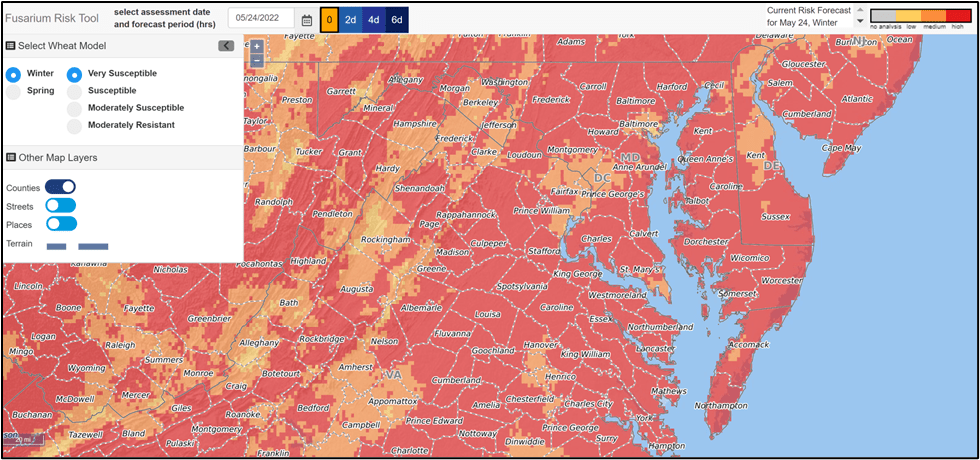
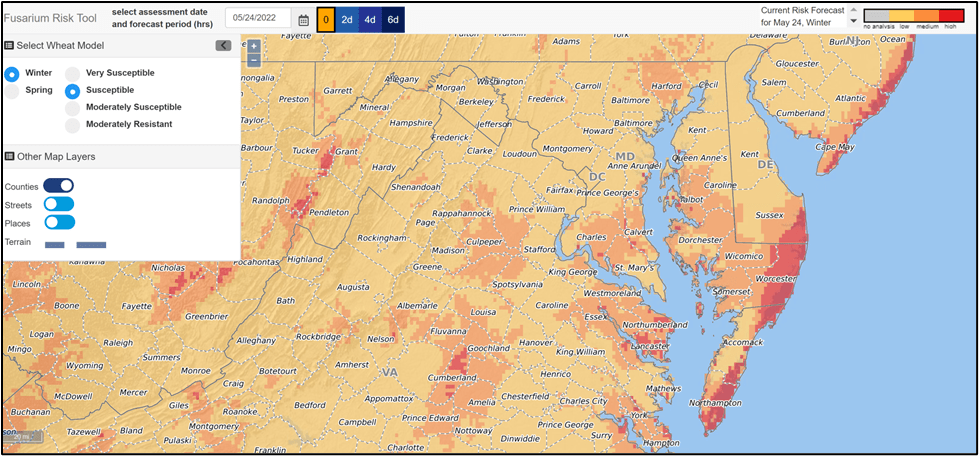
Flowering is finishing up across all of Maryland now, except for a few late planted fields in the northern part of MD that may still be flowering. FHB risk across the state continues to be high. So, if your wheat is currently flowering or has flowered within last 4-5 days, you can still spray FHB fungicides. I have started scouting the wheat variety trials for FHB symptoms on the Eastern shore and am already observing moderate FHB incidences in untreated plots there. The weather conditions have been conducive for FHB this season so far. If you have planted resistant varieties, the situation is expected to be better. Natural infections of leaf rust and stripe rust are also being seen sporadically. I do not expect any major losses due to these two now though. So, it’s okay not to spray any fungicide specifically for these diseases.

FHB RISK ASSESSMENT MARYLAND: 5/18/22

Nidhi Rawat, Small grains Pathologist
University of Maryland

Date 5/18/2022

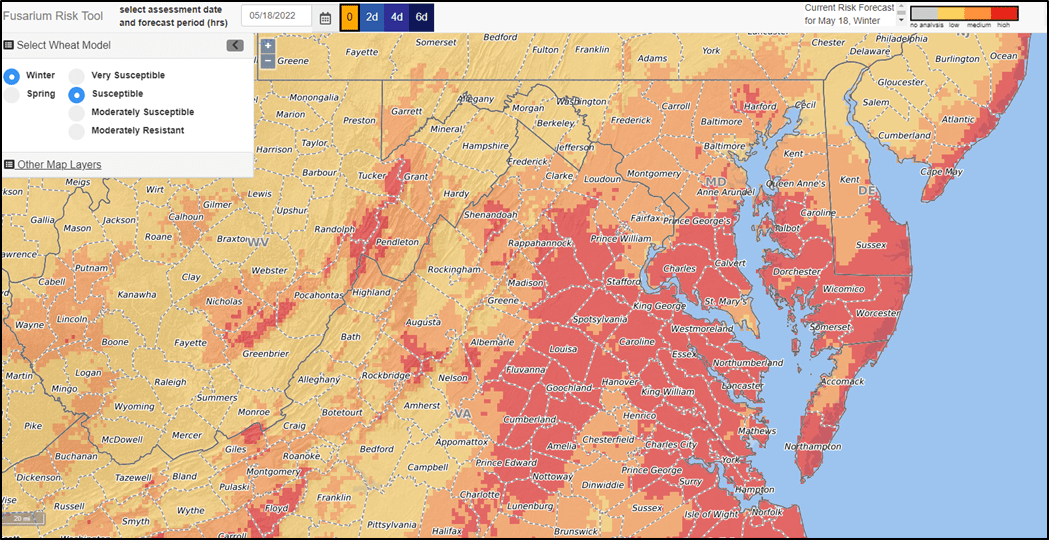
With the recent showers and warming weather, FHB risk in the state is increasing. Wheat in the Eastern Shore of Maryland has finished or is just finishing flowering. If your wheat has just flowered last week, and you have not sprayed FHB fungicides you can still do so, as fungicide application 4-6 days after flowering is also known to provide some control. Wheat in the Northern parts is either flowering/ will soon start flowering. The FHB risk for this part of the state (Frederick, Carroll and Harford counties) is predicted to be moderate to high, especially if the wheat variety planted is susceptible. If the planted variety is resistant, the risk is not predicted to be particularly high. The recommended stage for application of fungicides on wheat is at flowering (50% of the main tillers showing yellow anthers) or within 4-5 days of that. The fungicides effective for FHB are Prosaro-pro/ Caramba/ Miravis-Ace. These fungicides do not need to be tank mixed with another product for spraying. The fungicide products should be applied at the full rate recommended by the manufacturers. Strobilurin containing fungicides should not be sprayed at this stage.

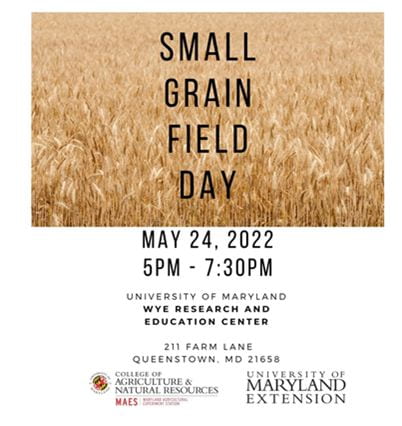
Small Grain Field Day

Join us for the 2022 Small Grain Field Day!

Date: Tuesday, May 24th, 2022

Time: 5PM – 7:30PM

Location: Wye Research and Education Center

211 Farm Lane, Queenstown, MD 21658

The program will start at the seed building and proceed to the fields.

Dr. Vijay Tiwari will discuss the small grain variety trials and his wheat breeding program. Dr. Nidi Rawat will then discuss fusarium research and prevention in wheat and barley. Next, we will have Dr. Alyssa Koeler touching on other small grain pathogens and Dr. Kurt Vollmer will bring us up to date on weed control in wheat. Finally, we will hear from Dr. Kelly Hamby on insect threats and control.

We also have a commercial variety strip trial organized by the Maryland Crop Improvement Association (MCIA) and industry reps will be on hand to discuss their entries.

Dinner will be served at 6:30, sponsored by Nagel Farm Service.

For more information and to registergo.umd.edu/smallgrain22

You can also contact Taylor Robinson at 443-446-4267 or taylormr@umd.edu.

For additional program information, contact John Draper at jdraper@umd.edu or 410-827-7388.

May 2022 Grain Market Report

Dale Johnson, Farm Management Specialist
University of Maryland

Information from USDA WASDE report

Attached is the summary for the May 2022 WASDE.

Corn

The 2022/23 U.S. corn outlook is for lower production, domestic use, exports, ending stocks, and higher prices. The corn crop is projected at 14.5 billion bushels, down 4.3 percent from last year. The corn yield is projected at 177.0 bushels per acre, 4.0 bushels below the weather adjusted trend presented at USDA’s Agricultural Outlook Forum in February. The very slow start to this year’s planting in the major corn producing States and the likelihood that progress by mid-May will remain well behind normal reduce yield prospects. Despite beginning stocks that are up relative to a year ago, total corn supplies are forecast to decline 2.7 percent to 15.9 billion bushels. Total U.S. corn use in 2022/23 is forecast to fall 2.5 percent on declines in domestic use and exports. Food, seed, and industrial (FSI) use is virtually unchanged at 6.8 billion bushels. Corn used for ethanol is unchanged relative to a year ago on expectations of flat U.S. motor gasoline consumption. Corn feed and residual use is down 4.9 percent relative to a year ago, reflecting a smaller crop, higher expected season-average farm prices received by producers, and a decline in grain consuming animal units. U.S. corn exports are forecast to decline 4.0 percent in 2022/23 as lower supplies and robust domestic demand limit prospects. Even with record exports projected for Argentina and Brazil, a 550-million-bushel drop in exports for Ukraine due to the ongoing conflict is the primary catalyst for a decline in world trade. With expectations of robust global demand in the face of high prices, the U.S. share of global corn trade is up slightly relative to a year ago. With total U.S. corn supply falling more than use, 2022/23 U.S. ending stocks are down 80 million bushels from last year. Stocks relative to use at 9.3 percent would be below a year ago and lower than the 14.4 percent average seen during 2015/16 to 2019/20. The season-average corn price received by producers is projected at $6.75 per bushel, up 85 cents from a year ago and if realized the highest since $6.89 reached during 2012/13.

Soybeans

The 2022/23 outlook for U.S. soybeans is for higher supplies, crush, exports, and ending stocks compared with 2021/22. The soybean crop is projected at 4.64 billion bushels, up 5 percent from last year’s crop mainly on higher harvested area. With slightly lower beginning stocks, soybean supplies are projected at 4.89 billion bushels, up 4 percent from 2021/22. The U.S. soybean crush for 2022/23 is projected at 2.26 billion bushels, up 40 million from the 2021/22 forecast. Domestic soybean meal disappearance is forecast to increase 2 percent from 2021/22 with low soybean meal prices relative to corn. U.S. soybean meal exports are forecast at 14.4 million short tons, leaving the U.S share of global trade near the prior 5-year average. With increased supplies, U.S. soybean exports are forecast at 2.2 billion bushels, up 60 million from the revised 2021/22 projection. Despite reduced soybean supplies available for export from South America for the first half of the 2022/23 marketing year, an anticipated record harvest and sharply higher exports beginning in early 2023 is expected to leave the U.S. with a lower share of global trade in 2022/23. U.S. ending stocks for 2022/23 are projected at 310 million bushels, up 75 million from the revised 2021/22 forecast. The 2022/23 U.S. season-average soybean price is forecast at $14.40 per bushel compared with $13.25 per bushel in 2021/22. Soybean meal prices are forecast down $20 per short ton from 2021/22 to $400 per short ton and soybean oil prices are forecast down 5 cents to average 70 cents per pound, as oilseed and product supplies rebound in foreign markets.

Wheat

The outlook for 2022/23 U.S. wheat is for reduced supplies, exports, domestic use stocks, and higher prices. U.S. 2022/23 wheat supplies are projected down 3 percent, as lower beginning stocks more than offset a larger harvest. All wheat production for 2022/23 is projected at 1,729 million bushels, up 83 million from last year, as higher yields more than offset a slight decrease in harvested area. The all wheat yield, projected at 46.6 bushels per acre, is up 2.3 bushels from last year. The first survey-based forecast for 2022/23 winter wheat production is down 8 percent from last year as lower Hard Red Winter and Soft Red Winter production more than offset an increase in White Wheat production. Abandonment for Winter Wheat is the highest since 2002 with the highest levels in Texas and Oklahoma. Spring Wheat production for 2022/23 is projected to rebound significantly from last year’s drought-reduced Hard Red Spring and Durum crops primarily on return-to-trend yields. Total 2022/23 domestic use is projected down 1 percent on lower feed and residual use more than offsetting higher food use. Exports are projected at 775 million bushels, down from revised 2021/22 exports and would be the lowest since 1971/72. Projected 2022/23 ending stocks are 6 percent lower than last year at 619 million bushels, the lowest level in nine years. The projected 2022/23 season-average farm price (SAFP) is a record $10.75 per bushel, up $3.05 from last year’s revised SAFP. Wheat cash and futures prices are expected to remain sharply elevated through the first part of the marketing year when the largest proportion of U.S. wheat is marketed.

Scouting Fields for Fusarium Head Blight

Alyssa Koehler, Extension Field Crop Pathologist | akoehler@udel.edu
University of Delaware

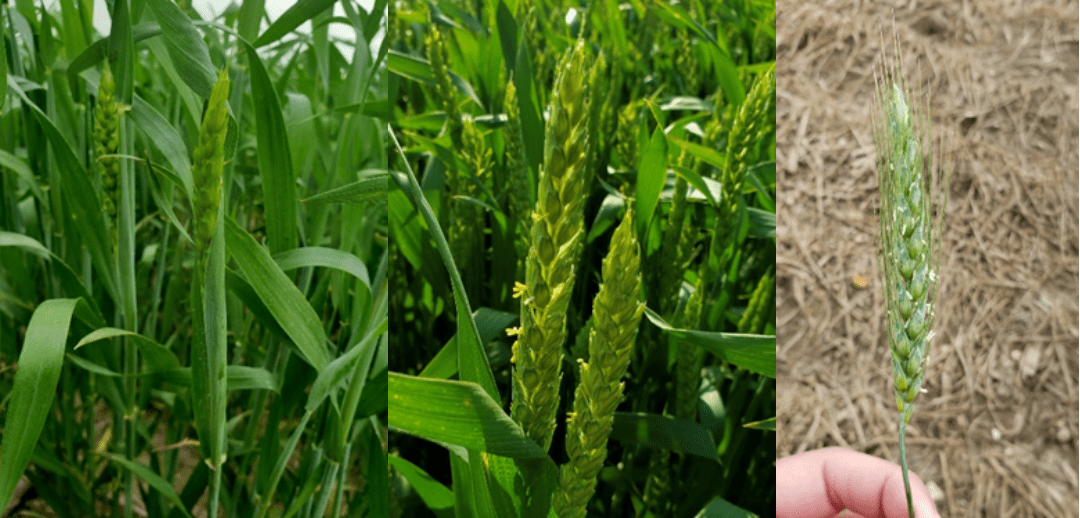
Symptoms of Fusarium Head Blight.

Wheat anthesis will be occurring over the next few weeks. So far this season we have been at low FHB risk, but we will keep a close eye on the rain events predicted over the next two weeks. Some areas are getting a bit dry, so the rain is needed, but we hope for sun after rather than multiple grey days that keep canopy moisture high. If you are planning for wheat fungicide application, scout frequently looking for yellow anthers in the center of the wheat head to signal that flowering has begun (Feekes 10.5.1). Once around 50% of heads are flowering, fungicides (Caramba, Sphaerex, Miravis Ace, Prosaro, Prosaro-Pro) are most effective when applied within a 4-5 day window. Anthers can remain attached after flowering, but become a pale white (Figure 1). Once wheat has flowered, symptoms of FHB are visible in 18-24 days, but cool weather can slow symptom development. Heads with FHB will have bleached florets or bleached sections of the head (Figure 2) and may have pink growth on spikelets. Glume blotch may also be present, but typically has more of a grey appearance. You can follow these steps to assess the level of FHB present in your field.

Figure 1. From left to right: Feekes 10.3, Anthesis; Feekes 10.5.1 (yellow anthers beginning flowering); 4 days after anthesis (white anthers post flowering). Image: A. Koehler, Univ. of Delaware.
  1. For every 10 acres of field, randomly select one spot to survey.
  2. Keeping your line of sight above the wheat heads, walk 40-50 yards and randomly pick 10-20 heads to look at on the plant or detach and place into a bag. (You don’t want to be looking down and biasing the heads you select).
  3. Once you have randomly collected the heads, rate the percent of each head with symptoms of FHB (bleaching or pink growth on spikelets).
  4. After you have recorded values for each head, determine the average percent FHB severity by dividing the sum of disease severities by the total number of heads collected. (Ex. You rate 10 heads with severity values: 0, 10, 30, 0, 0, 20, 10, 0, 0, 0. These add up to 70. 70/10 heads = 7% FHB severity). Higher levels of FHB are typically associated with elevated levels of DON and possible issues with yield and test weight. It is possible to have delayed or lower levels of symptoms and still have DON.
  5. Repeat this assessment as needed to get an overall rating for the field. Fields with greater than 10% FHB severity are at higher risk for yield losses or elevated DON. Fields with elevated DON should be harvested as early as possible and you may want to consider increasing combine fan speeds and shutter openings to reduce the amount of scabby kernels harvested.

Maryland Regional Crop Reports: May 2022

Western Maryland

Erratic weather patterns continue to dominate and challenge us here in Washington County. While we can still use precipitation, it has recently been coupled with wild temperature swings. In the 70s or low 80s and then back to the low fifties with nighttime temperatures on several occasions hovering near freezing. Triticale harvest is over half finished but very little corn has gone in the ground. First cutting alfalfa will begin early next week barring rain showers. First cutting hay of any kind looks like it will be below normal. Forever the optimist, second cutting will be better.—Jeff Semler, Washington Co.

Central Maryland

Small grain silage harvest is in full swing. Manure is being hauled and corn is being planted. Some soybeans have been planted. First cutting of hay may also start soon. Over the past month, most of the area has been at or above normal rainfall, according to the National Weather Service. Field work may slow down depending on much rain we get this weekend, but next week is forecasted to be drier and in the 70s. —Kelly Nichols, Montgomery Co.

Northern Maryland

The trend for April has been a continuation of March—cool temperatures that rarely want to move out of the 60s. As a result, the start of planting was about a 5-10 days later than usual for this region. Most planting kicked off the week of Easter. In general, small grains look good. Barley is headed out and wheat is a couple of weeks away. Some rye has been chopped for feed. Pastures and hay fields are enjoying the cooler temperatures.—Andy Kness, Harford Co.

Upper & Mid Shore

Soil moisture has been perfect for spring crops, field work, and planting. Soil temperatures have been a little cool for this time of year. Many acres of corn and beans have went in over the past week. Barley is fully headed and wheat will be in a few days. Both look good. Hay and pastures look good, but the cool weather has them a little behind normal.—Jim Lewis, Caroline Co.

Lower Eastern Shore

Wheat is starting to pollinate. It’s been a relatively dry spring, making for an average to above average wheat crop, with minimal disease pressure. Cover crops have been mostly terminated. However, where still standing, cover crops are looking great. These late-terminated cover crops should bring additional benefits to the fields, such as providing substantial organic matter to the soil, and in some cases releasing nitrogen on the soil surface. Growers have spread poultry manure. Weather has been relatively favorable these last couple of weeks for planting. Corn has started to be planted. Much more corn acreage is expected to be planted in the next weeks, to be followed by soybean planting.—Sarah Hirsh, Somerset Co.

Southern Maryland

The region has experienced good planting conditions over the last week. Corn planting progress is still a bit behind schedule with cooler soils limiting the number of early-planted acres. Most farmers are finishing up with corn planting and have started with soybean planting. Recent showers were welcome with soil conditions becoming slightly dry during the last couple of weeks. Wheat is in the early heading stage and many fields will be flowering by the time you read this. Farmers will be evaluating the need for a head scab fungicide in the next few days. Many wheat fields are exhibiting yellowing in the upper canopy that is not readily attributable to any disease. We are also seeing a lot of powdery mildew in the lower canopy, but very little in the upper canopy. Insect and disease pressure has been light so far. Forage crops look great this spring. Alfalfa weevil are very active this year and many fields required treatment. Pyrethroid resistance continues to be an issue for our growers. First cutting of cool season grasses is underway.—Ben Beale, St. Mary’s Co.

*Regions (counties):

Western: Garrett, Allegany, Washington. Central: Frederick, Montgomery, Howard. Northern: Harford, Baltimore, Carroll. Upper & Mid Shore: Cecil, Kent, Caroline, Queen Anne, Talbot. Lower Shore: Dorchester, Somerset, Wicomico. Southern: St. Mary’s, Anne Arrundel, Charles, Calvert, Prince George’s
2022 Corn, Soybean, and Wheat Fungicide Efficacy Tables

Andrew Kness, Agriculture Agent | akness@umd.edu
University of Maryland Extension, Harford County

Each year, data from Universities around the country are aggregated and used to update fungicide efficacy guides for corn, soybean, and wheat. These tables are put together by the Crop Protection Network and can be found on cropprotectionnetwork.org.

These tables serve as handy reference guides to determine the best chemistry to manage certain diseases. The ratings in the table reflect the relative efficacy of a product to manage a given disease, it does not rate yield response to a fungicide. Links to the tables are found below, or contact your Extension agent for a copy.

Soybean seedling diseases

Soybean foliar diseases

Corn foliar diseases

Wheat foliar diseases