Mid-Summer Insect Scouting Priorities in Row Crops

Hayden Schug, Agriculture Agent | hschug@umd.edu
University of Maryland Extension, Charles County

As we move into July and August, insect pressure tends to ramp up across Maryland row crops, particularly in soybeans and corn. These months are critical for monitoring pest activity and making timely, threshold-based decisions. Several pests are commonly active during this period, including corn earworm, stink bugs, Japanese beetles, other defoliators, and spider mites.

Corn earworm moths typically migrate into Maryland in larger numbers in mid to late July, although some can overwinter here, and early flights have already been reported moving up the coast. In soybeans, larvae can cause significant injury during the R1 to R5 growth stages by feeding on pods and developing seeds. When I ran the numbers, the threshold was approximately 2.5 larvae per 15 sweeps, but thresholds can vary depending on market value and treatment cost. You can use the NCSU dynamic threshold calculator to run your own field-specific estimates: https://go.umd.edu/CEW. It’s important to sample evenly across the field, as female moths may lay eggs in clusters, leading to localized infestations. Many corn earworm populations show resistance to pyrethroids, so growers should consider using alternative insecticide chemistries when treatment is needed.

An image of corn earworm, green cloverworm, and soybean looper on a white background
Figure 1. Common soybean pest caterpillars. Graphic by Hayden Schug, University of Maryland.

Defoliating insects, such as Japanese beetles, bean leaf beetles, grasshoppers, green cloverworms, and soybean loopers, can all be active during July and August. Last year in Southern Maryland, there were soybean fields that reached defoliation thresholds from grasshopper feeding alone. In many cases, damage was more severe in the center of the field, so it’s important to walk the entire field and not rely solely on edge scouting. Defoliation thresholds are based on cumulative injury from all feeding insects. Economic thresholds are 30 percent defoliation before bloom (V1–V6), 15 percent from bloom through pod fill (R1–R6), and 25 percent from full seed to maturity (R7–R8). A helpful visual guide and estimator tool is available through the University of Nebraska (Figure 2).

Diagram of soybean plant and how to determine defoliation percentage
Figure 2. Sampling soybean defoliation. Infographic by Justin McMehan, University of Nebraska.

Stink bugs, including brown and brown marmorated species, are another priority pest in soybeans and corn during mid-summer. They damage pods by piercing and feeding on developing seeds, often resulting in aborted or shriveled beans. Scouting is most important from R3 to R5. The general treatment threshold is five stink bugs per 15 sweeps, but this drops to three per 15 sweeps in fields grown for seed or planted early.

Finally, spider mites may become a problem during periods of hot, dry weather, especially along field edges. These pests cause stippling and bronzing of leaves and can spread quickly under drought stress. Treatment should be considered when active mites are present on the undersides of leaves and bronzing or stippling begins to move into the upper canopy. Threshold estimates follow the 15 percent defoliation threshold, and plants should be treated when that level of injury is reached. 

In corn, Japanese beetles can clip silks and interfere with pollination. The treatment threshold is 3 or more beetles per ear, and pollination is still ongoing. Almost all pollination occurs within the first 4-5 days of silking, so any damage done by silk clipping after that period should not affect yield. It is important to look at ears throughout the field as Japanese beetles tend to congregate on field edges. 

Regular scouting during the next several weeks will be essential to managing pest pressure effectively. Making decisions based on economic thresholds helps protect yield while avoiding unnecessary insecticide applications. If you would like assistance with scouting, pest identification, or choosing control options, contact your local Extension office.

Next Generation Grain Management: Budget, Risk, and Reporting Tools

Paul Goeringer, Agriculture Law Legal Specialist| lgoring@umd.edu
University of Maryland Extension, Agriculture Law Education Initiative

Maryland grain farmers are invited to participate in an innovative workshop designed to enhance business operations and risk management strategies through the use of cutting-edge tools and resources. This multi-project session will bring together key programs to provide hands-on training, demonstrations, and discussion. This interactive workshop will feature the Maryland Grain Budget Planner website and curriculum, designed to support crop budgeting and sound financial decisions. In addition, the Ag Law Education Initiative will present “Learning Ag Law at Your Own Pace: Basic Legal Issues and Ag Labor Issues,” covering essential legal topics facing today’s farm businesses.

Participants will also receive a guided demonstration of the Maryland Agriculture Reporting Assistant, a new data-driven platform. This platform enables producers to streamline data collection, analysis, and reporting for statewide and national reports, such as the Nutrient Management Annual Implementation Report (AIR) and farm yield reporting for crop insurance purposes.

The training will be conducted at the Wye Research and Education Center in Queenstown, MD, on Wednesday, August 6, 2025, from 9:00 a.m. to 1:30 p.m., with registration beginning at 8:30 a.m. It is free and open to all. Lunch will be provided, and we suggest bringing your laptop to pilot the web-based programs.

Register today to secure your spot and learn how these tools can benefit your operation. If accommodation is needed, please reach out 2 weeks before the session.

Please register at: https://ume.qualtrics.com/jfe/form/SV_3w88bc9Yb4aOVym

This is material is based upon work supported by USDA/NIFA under Award Number 2023-70027-40447.

Strategies for Minimizing FHB Related Price Discounts at Harvest

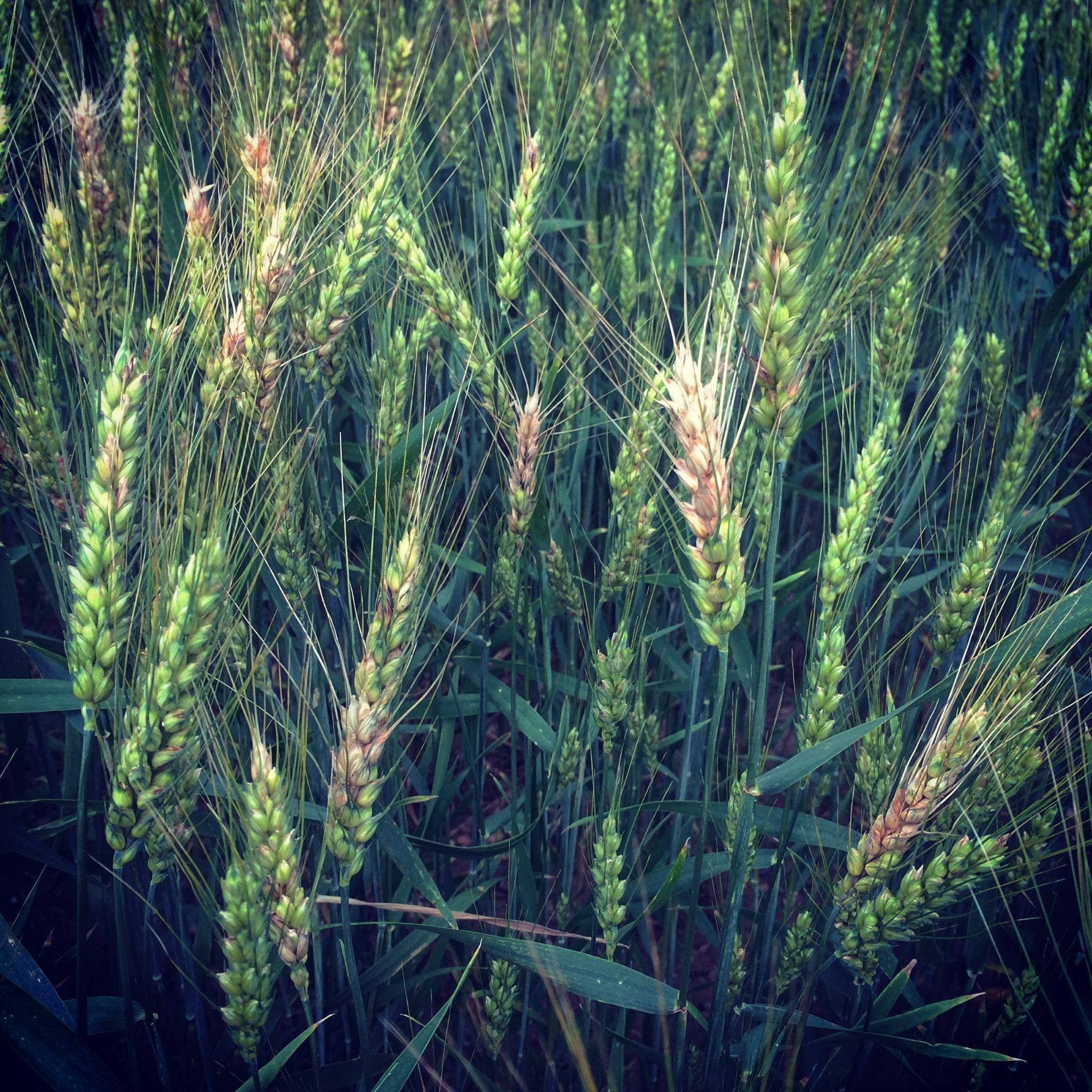
wheat infected with head scab
Nidhi Rawat, Small Grains Pathologist | nidhurw@umd.edu
University of Maryland, College Park

Reposted from the US Wheat and Barley Scab Initiative

It’s almost harvest time and Fusarium head blight (FHB) can reduce wheat and barley grain yield and quality, leading to price discounts due to Fusarium-damaged kernels (FDK), deoxynivalenol (DON), and reduced test weight. If your fields are affected by FHB, adjusting your combine settings can help improve grain quality and reduce losses. Additional strategies such as increasing the fan speed, keeping scabby grain separate, testing for DON, and cleaning of grain can also make a difference. Here are a few strategies to consider for minimizing price discounts at harvest.

Based on a study in the journal Plant Disease, modifying combine settings to increase fan speed and shutter opening could improve grain quality and reduce price discounts enough to counteract the reduction in harvested grain compared to the standard combine setting.

Researchers tested four combine configurations:

Plots with varying levels of FHB index were harvested with each combine setting. Compared to the standard setting (C1), settings C2, C3, and C4 led to lower estimated price discounts by $10 to $40 per ton (see table below). C3 and C4 gave the biggest reductions in price losses by improving grain quality.

Table. Grain quality and price discounts for plots with varying levels of FHB index harvested with four different combine configurations.

The estimated gross income was higher with combine settings C2 and C4, with C4 having the most consistency performing well across different levels of FHB index (5 to 35%) and grain prices ($118 to 276/t).

Key Takeaway Messages:

  • Increasing airflow to remove scabby kernels is a profitable strategy.
    • In this study, increasing airflow through the combine by increasing fan speed (from 1375 to 1475 rpm) or by increasing shutter opening (from 70 to 90 mm) optimized profitability, as the reduction in discounts due to scabby kernels was enough to offset the loss in revenue due to reduced yield.
  • However, be careful not to increase airflow by too much.
    • In this study, increasing both fan speed and shutter opening did not optimize profit, as the marginal improvements in grain quality were not enough to overcome the increased yield loss.
  • Although plot combine configurations are not directly applicable to field-scale equipment, know that you can fine-tune your combine airflow settings to improve profitability when harvesting FHB-damaged grain.

Thank you for reading! Feel free to forward this message to your community. Want to receive FHB Tool Talk e-newsletters? Subscribe today!

Maryland Regional Crop Reports: June 2025

For crop conditions up to June 5, 2025

Western Maryland

And then the rains came. March and early April was frighteningly dry but May brought us much needed rain. The slugs seem to have become an annual nemesis. I have heard of many acres of corn and soybeans either treated with bait or in need of replanting. Barley and wheat are ripening well. The necessary fungicide treatments have been applied and yields are looking good. Most of the hay is in the round bale or barn even if some of it was older than you would hope. But the rain was welcome and there are always tradeoffs in farming.—Jeff Semler, Washington Co.

Central Maryland

Central Maryland has experienced moderate temperatures with scattered showers over the past week, providing adequate soil moisture. Corn emergence is complete, with growth stages ranging from V2 to V5. Soybean planting is largely complete and most fields have fully emerged. All this rain and cool weather has caused some stands to be thin and uneven. In addition, I have observed slugs in every field I have scouted. Producers should be conducting stand counts and assessing their need to replant. Small grains are heading out and inching toward maturity. With a warmer and drier forecast over the next 10 days, I think we’ll see corn and soybeans take a quick leap forward in growth.—Nathan Glenn, Howard Co.

Northern Maryland

Unseasonably cool temperatures and several rain events have been the theme for the past month. Most corn is between V2-V4, with earliest planted near or at V6; some fields have received sidedress nitrogen. The cool, wet soils have resulted in some uneven corn stands due to a combination of disease and nitrogen loss. Some sun and nitrogen should get things back on track. Barley is turning and wheat is not quite turning but looks good. Soybeans have been very slow to grow with the cooler temperatures. It’s been difficult to find enough consecutive dry days to make hay—most was cut and put up this week, several weeks beyond optimal maturity.—Andy Kness, Harford Co.

Upper & Mid Shore

No report this month.

Lower Eastern Shore

Wheat is ripening quickly with an anticipated harvest of early July. Barley should be ready for harvest within the next couple of weeks. Late-growing cover crops have now been terminated. After a stretch of warm and dry weather, the weather turned cold and rainy. This cold and wet weather slowed down soybean growth. Furthermore, there is significant acreage of full season soybean that still needs to be planted. Deer are grazing soybean seedlings, causing substantial damage in some fields. Corn that was planted prior to the rain is looking great. The rain allowed the seedlings to grow rapidly, and many fields are approaching the time for nitrogen to be side-dressed. Corn planting on a few fields got interrupted by the rain, and is currently being planted.—Sarah Hirsh, Somerset Co.

Southern Maryland

Longer days and sunshine finally abound. The region has received persistent rain showers over the last month. Growers on wetter ground have struggled to find planting windows with acceptable soil conditions. Early corn is a kaleidoscope of green and yellow shades. Wetter conditions have caused some denitrification and leaching of N, and side dress N applications have been delayed. Much of the corn ground received additional N last week and is responding well. The drier and warmer conditions this week will help. Soybean planting progress is similar to corn, with many soybeans still in the bag. Growth of beans has been slow with cooler conditions. Deer damage seems to be more severe as beans struggle to grow out of clipping injury. We have had sporadic issue with slugs. The wheat crop is yellowing and drying down. Unfortunately, there appears to be a lot of rust and other foliar disease that came in late in the season that will hurt yield and test weight. I have not observed a lot of head scab.—Ben Beale, St. Mary’s Co.

*Regions (counties):
Western: Garrett, Allegany, Washington. Central: Frederick, Montgomery, Howard. Northern: Harford, Baltimore, Carroll. Upper & Mid Shore: Cecil, Kent, Caroline, Queen Anne, Talbot. Lower Shore: Dorchester, Somerset, Wicomico. Southern: St. Mary’s, Anne Arundel, Charles, Calvert, Prince George’s

Scouting Smarter: June Insect Pressure and Threshold Tips

Hayden Schug, Agriculture Agent | hschug@umd.edu
University of Maryland Extension, Charles County

As Maryland’s corn and soybean fields move into early vegetative and reproductive stages, June marks a key time for pest scouting. Early detection and threshold-based decisions are the foundation of a strong Integrated Pest Management (IPM) strategy, and this month brings several common threats that row crop producers should be on the lookout for.

Begin scouting for stink bugs in corn, especially along field edges. These pests often move in from neighboring wheat fields during harvest or from forested areas. They tend to show up first along borders and gradually move toward the field interior, so edge-focused scouting is important early on. From V1 to V6, the treatment threshold is 13 stink bugs per 100 plants; this drops to 10 per 100 plants from V14 to VT. Pyrethroids have shown good knockdown efficacy against stink bugs, but keep in mind that they tend to have a short residual period.

Soybean fields are also entering critical scouting windows. VE to V3 soybeans are susceptible to early defoliation from bean leaf beetles, grasshoppers, and other chewing pests. While the damage may look concerning, soybeans can tolerate up to 30 percent defoliation before bloom without experiencing yield loss. Be sure to scout multiple locations across the field, not just the edges, as field borders often exaggerate pest pressure.

Slugs have caused some issues this spring in Southern Maryland. While most fields are planted by June, it’s still worth noting that slugs can remain a concern, especially in no-till systems with heavy residue. Ensuring good furrow closure is key to preventing slugs from accessing germinating seeds. Using row cleaners to clear residue from around the furrow can also help reduce slug habitat and early pressure. If damage is suspected, conducting stand counts can help determine whether replanting is necessary as soybeans can compensate for stand loss. 

Alfalfa should be scouted for potato leafhoppers beginning in late May/early June. Regular scouting is very important, once hopper burn becomes visible in the field, yield loss has already occurred. Unlike alfalfa weevil, where the first harvest often reduces populations enough to avoid further issues, potato leafhoppers have multiple generations each year and can quickly reinfest fields after harvest or treatment, so continued scouting is necessary. For a dynamic threshold calculator and detailed scouting tips, check out this resource from Penn State Extension, https://extension.psu.edu/potato-leafhopper-on-alfalfa.

Hot and dry weather can also accelerate the development of secondary pests, particularly spider mites along field edges. While not typically a major issue in June, early flare-ups can occur during periods of drought stress. It’s worth inspecting leaf undersides in stressed areas to catch hot spots before populations expand.

Effective scouting depends on consistent, thoughtful observation. Early morning or evening visits often reveal pests that remain hidden during the heat of the day. Scouting beyond the field edge helps avoid over- or underestimating pest populations. Most importantly, only apply insecticides when economic thresholds are met. Doing so helps reduce unnecessary costs, preserves beneficial insects, and slows the development of pesticide resistance.

Considerations for Preplant Control of Palmer amaranth and other Pigweeds in Soybean

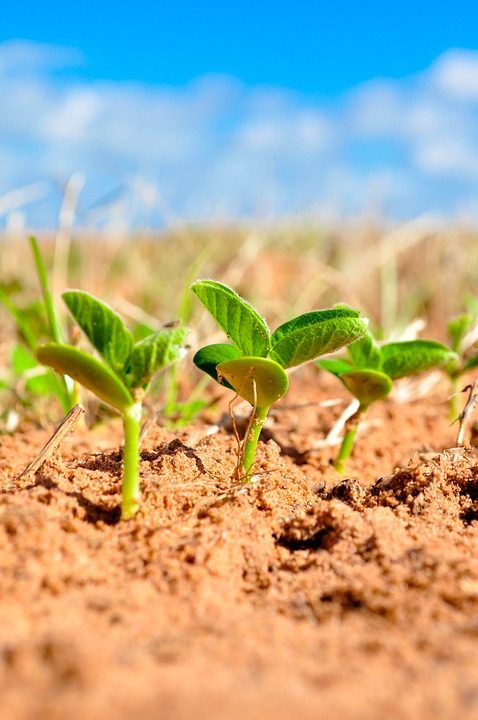
small seeding plants growing in a tilled field
Kurt Vollmer, Weed Management Extension Specialist|kvollmer@umd.edu
University of Maryland Extension

Palmer amaranth and other pigweeds have emerged and are thriving. These weeds can quickly become too large and dense to control with many herbicides, so fields should be scouted and control measures implemented immediately. A contact herbicide, such as paraquat, applied at a spray volume of 20 gal/A can be used to control small plants prior to planting.

Soil-applied, residual herbicides may also be included as part of the preplant application. Flumioxazin or sulfentrazone-based products plus metribuzin or pyroxasulfone or S-metolachlor plus metribuzin have proven to provide effective control of Palmer amaranth and other pigweeds. However, planting should not be delayed too long after application, as herbicide efficacy will wane over time. If possible, incorporate with at least 0.5 inches if irrigation to activate the herbicides. Consult the label before mixing any herbicides, and be aware of any rotational restrictions before applying these herbicides, especially to double-crop soybean. Applicators should also be aware of potential drift issues to sensitive areas.  

Cultivation can be effective on small seedlings (<3 inches), but larger plants are likely to re-grow if roots or stem remain in contact with the soil. Since Palmer amaranth can emerge throughout the growing season, repeated cultivation is necessary for control. However, local research has shown that spring tillage can result in higher Palmer amaranth densities compared to no-till systems. Other practices such as spring disking, chisel plowing, or vertical tillage will not provide adequate control. 

Regardless of the control method used, be sure to scout in a timely manner after each operation to determine if additional control is needed. Tank mixing at least two effective modes of action, such as Enlist One + Liberty, and an additional residual herbicide, is recommended for both postemergence control and herbicide resistance management. Reducing soybean row spacing from 30 inches to 15 inches will also allow for faster canopy development, which will help negate the need for additional weed control.

Soybean Replant Decisions: Weighing the Economics Before Turning the Planter Around

Nathan Glenn, Agriculture Agent Associate | nglenn@umd.edu
University of Maryland Extension, Howard County

Cool, wet conditions and early-season pest or disease pressure across Maryland may have resulted in thin or uneven soybean stands, prompting farmers to ask: Should I replant? The answer hinges on one key question:

Will the expected gross return of a replanted stand be greater than the gross return of the existing thin or uneven stand?

A replant decision isn’t just agronomic—it’s economic. Later planting dates usually mean lower yield potential, and replanting incurs additional costs. Making a data-driven decision requires careful scouting, accurate calculations, and a clear understanding of potential return on investment. Here’s what you can do:

Step 1: Identify the Cause of the Poor Stand

Before replanting, determine why the original stand failed. Cold soil temps, soil crusting, slug damage, herbicide injury, seedling disease, and insect damage are common culprits. Without addressing the root cause, a replant may suffer the same fate. Consider seed treatments, adjusting planting depth, or changing varieties if necessary. I have seen slug damage in every soybean field I have been in so far this year, but it seems like they might outgrow it, especially with this warm, dry weather forecasted in central Maryland over the next 10 days. Sometimes all you need is better weather!

Step 2: Conduct Accurate Stand Counts

Two common methods can help determine how many plants per acre you currently have:

  1. Traditional Row Length Method:
  • Count the number of plants in a length of row that equals 1/1,000th of an acre.
  • Example: In 30-inch rows, count plants in 17 feet, 5 inches.
  • Multiply the count by 1,000 to get plants/acre.
  1. Hula Hoop Method:
  • Toss a hoop (typically 30-inch diameter) randomly in the field.
  • Count the number of plants inside the hoop.
  • Multiply by a conversion factor (8,900 for 30-inch hoop) to estimate plants/acre.

Step 3: Estimate Yield Potential of the Current Stand

Use your plant population and uniformity to estimate yield potential:

Yield potential of a soybean field with reduced stands at 7.5 inch and 30 inch row spacings

Population

Drilled (7.5 inch rows)

Planter (30 inch rows)

160,000

100

100

120,000

100

100

80,000

96

100

60,000

92

94

40,000

87

88

20,000

77

81

10,000

58

72

 Adapted from Table 1.6-3, The Agronomy Guide, Penn State Extension

Yield potential of full-season soybeans due to uneven deficient stands (i.e. gaps)

Percent stand lost to gaps

140,000 plants/acre

105,000 plants/acre

70,000 plants/acre

0

100

97

95

10

98

96

93

20

96

93

91

30

93

90

88

40

89

86

83

50

84

81

78

60

78

75

73

 Adapted from Table 1.6-4, The Agronomy Guide, Penn State Extension

Step 4: Estimate Yield Potential of a Replanted Stand

Later planting reduces yield potential even in ideal conditions. Use the table below:

Approximate yield reduction of soybeans due to delayed planting date

Date

Percent of full yield potential

10-May

100

20-May

98

30-May

95

10-Jun

88

20-Jun

76

30-Jun*

70

10-Jul*

60

This table quantifies the estimated yield penalty as planting date is delayed. Adapted from Table 1.6-5, The Agronomy Guide, Penn State Extension. * Relevant only in areas where double cropping is practiced. 

Step 5: Estimate the Costs of Each Option

Costs of Keeping the reduced stand:

  • Reduced herbicide efficacy due to open canopy
  • Increased weed competition
  • Yield reduction

Costs of replanting:

  • Seed: $60–$80/acre
  • Fuel and labor: $10–$15/acre
  • Machinery wear: $5–$10/acre
  • Additional herbicide or pesticide: varies
  • Total estimated replant cost: $75–$120/acre

Step 6: Use a Soybean Replant Decision Worksheet

Here’s how the math works, step by step:

Example Scenario:

  • Current stand: 70,000 plants/acre, 20% gaps, 30 inch rows
  • Expected market price: $10.50/bu
  • Expected yield of a full stand: 60 bu/acre

Current Stand:

  • 91% of normal yield (70,000 plants w/20% gaps)
  • 60 bu/ac × 0.91 = 54.6 bu/ac
  • Added costs = $0
  • Gross return = 54.6 bu × $10.50 = $573.30/ac

Replant Option:

  • Planted June 10 → 88% yield potential
  • 60 bu × 0.88 = 52.8 bu/ac
  • Gross return = 52.8 bu × $10.50 = $554.40/ac
  • Added costs = $100/ac
  • Gross return = $554.40 – $100 = $454.40/ac

Conclusion: Do not replant—your current stand is more profitable by $118 per acre

Final Thoughts

Soybean replant decisions should always be based on data, not emotion. Accurately assess plant population, uniformity, yield potential, and costs. Many reduced stands still yield competitively, especially when gaps are minimal and plants are healthy.

For help making the best decision for your farm, contact your local Extension office or agronomist.

Keep an Eye Out for Cereal Leaf Beetle in Wheat Fields This Spring

Hayden Schug, Agriculture Agent | University of Maryland Extension, Charles County | hschug@umd.edu 
Ben Beale, Principal Agriculture Agent | University of Maryland Extension, St. Mary’s County | bbeale@umd.edu 

Cereal leaf beetle (CLB) is a familiar pest for Maryland wheat growers, and this time of year is ideal for scouting. We often find cereal leaf beetles while scouting for foliar disease like powdery mildew and stripe rust or checking wheat for flowering stage in preparation for fusarium head scab fungicide applications. While both adults and larvae can be present, it’s the larvae (Fig. 1) that cause the most damage. Often mistaken for bird droppings, these larvae feed aggressively on leaf tissue, potentially leading to significant yield loss in wheat if populations are high enough. In Southern Maryland we have found low populations of cereal leaf beetle larvae feeding in wheat throughout most fields. However, only one of these fields met the threshold that would warrant an insecticide application, so it’s important to understand threshold levels. 

Beetle larvae feeding on a wheat leaf
Figure 1. Cereal Leaf Beetle larva on wheat. (Hayden Schug).

Adult CLBs (Fig. 2) overwinter in wooded areas and field edges, becoming active as temperatures rise in early spring. They move into small grains and lay distinctive orange or yellowish eggs on the upper surface of wheat leaves, typically singly or in short rows. After hatching, the larvae feed for two to three weeks, chewing narrow, elongated strips between the leaf veins. This results in a “windowpane” effect—thin, transparent patches where only the leaf epidermis remains (Fig. 3). Larvae appear dark and slimy due to a coating of fecal material, though they are actually yellow underneath. When walking through a field with CLB present, a tell tale sign is black stains that appear on pants legs. 

Beetle on a wheat leaf
Figure 2. Adult Cereal Leaf Beetle on wheat. (Hayden Schug).

Leaf beetle larvae on a wheat leaf with feeding damage from the beetles
Figure 3. Feeding Damage (Peter Oetelshofen, Adobe Stock).

Scouting should begin in late March or early April, especially in no-till fields, those near wooded areas, or where there is a history of CLB infestation. When scouting, check 10 tillers at 10 random locations per field and look for larvae, eggs, or adult beetles, which have shiny blue wing covers with reddish thoraxes and legs.

Treatment is recommended when there is one larva per flag leaf after boot stage. If treatment is necessary, insecticides containing pyrethroids such as lambda-cyhalothrin (Warrior) or zeta-cypermethrin (Mustang Max) are effective. Be mindful of insecticide rotation to avoid resistance, and always check pre-harvest intervals.

Scouting and timely management are key to minimizing the impact of cereal leaf beetle. Keep an eye on your fields while out scouting to determine if you need to add an insecticide to your fungicide treatments.

Maryland Regional Crop Reports: May 2025

Western Maryland

Recent rains have given us hope, but more showers are needed. Corn planters are running. Tritcale and the first cutting of alfalfa are in windrows across the county. Barley heads are emerging, and FHB risk is low so far. As soil and air temperatures warm, soybean planting will follow.—Jeff Semler, Washington Co.

Central Maryland

Rain has been spotty throughout Howard, Montgomery and Frederick counties. Despite this, even the most dry areas seem to have received enough timely rain so that there are adequate levels, or perhaps only a slight deficit of soil moisture. Temperatures are rising with most days in the last week having lows hovering around 50 degrees and highs between 75 and 85 degrees. Burn down programs have been implemented for the most part, or the fields are being tilled and prepped. Corn is being planted, and some are already switching over to beans.—Nathan Glenn, Howard Co.

Northern Maryland

A few welcome rain evens came in April but we are still very dry. Cool soil temperatures delayed the start of planting by about 10 days compared to a normal year; however, planters have been running wide open for about two weeks now and a significant proportion of the corn and soybean crop is already planted. If the weather forecast holds true, we may get some nice rain next week that will really benefit the newly planted crop. Barley is heading out and wheat is getting close to flag leaf emergence. First cutting alfalfa is just around the corner and alfalfa looks good. Small grain chopping for forage started last week.—Andy Kness, Harford Co.

Upper & Mid Shore

The cobwebs have been cleared from the farm equipment, and tractors are once again a common sight on our back roads as #Plant2025 kicks into gear. Cover crops are being terminated, and steady progress is being made with corn planting. April brought timely rains, providing enough moisture for germination without causing major delays to fieldwork. Soil conditions have been mostly favorable, allowing planting and other spring operations to move forward on schedule. Meanwhile, small grains are heading, with some barley beginning to flower. Here’s hoping this season’s crop turns out much better than last year’s.—Dwayne Joeseph, Kent Co.

Lower Eastern Shore

We have had a stretch of dry weather and farmers are busy planting corn and starting to plant soybean. Manure is being applied ahead of planting. Most cover crops have been terminated. Cover crops this year had a rough start due to fall drought conditions. However, I’ve seen quite a few fields of cover crops growing into mid-April or May that really pulled through with impressive spring growth and ground coverage. Wheat is heading and looking good.—Sarah Hirsh, Somerset Co.

Southern Maryland

The region received widespread rain showers 3 weeks ago. We need more. Corn planting is behind schedule but good progress was made in the last 10 days. Soil conditions are very dry in most areas and planting will become challenging soon. Soybean planting is also continuing. Spraying has been difficult with the windy conditions. Wheat is heading out and early varieties are beginning to flower now. Most growers are waiting for rains forecasted later this week to pass before re-assessing the need for scab fungicides. A lot of good quality first cutting hay has been made.—Ben Beale, St. Mary’s Co.

*Regions (counties):
Western: Garrett, Allegany, Washington. Central: Frederick, Montgomery, Howard. Northern: Harford, Baltimore, Carroll. Upper & Mid Shore: Cecil, Kent, Caroline, Queen Anne, Talbot. Lower Shore: Dorchester, Somerset, Wicomico. Southern: St. Mary’s, Anne Arundel, Charles, Calvert, Prince George’s

Testing GPS Dog Collars as a Tool for Crop Protection

John Jamison, Farmer, Dickerson, Maryland
and Luke Macaulay, Wildlife Management Specialist, University of Maryland Extension

With deer, goose, and groundhog pressure a problem for many farmers, some folks looking at a familiar ally for help: the farm dog.

Recent improvements in GPS-based shock collars (also known as virtual fence collars) have made it easier than ever to turn your dog loose to patrol your fields—without needing to install physical fencing or bury electric wires.

These collars are now affordable (ranging from $79 for Chinese-made NSPET Brand to $800 for American-made SpotOn GPS Dog Fence) and easy to program using a smartphone. Once set, the collar gives a beep, vibration, and—if necessary—a static correction to keep dogs inside your virtual boundary.

I’ve been testing this system on my own 77-acre farm with a Border Collie and a Catahoula. One barks and alerts, the other chases. Early results have been encouraging—groundhog activity is down, and the dogs are staying inside the boundaries reliably.

Two dogs running on the edge of a farm field
Figure 1. This border collie and catahoula have been helpful allies in driving off groundhogs on the Jamison Farm.

What We’re Trying to Learn

Past research has found success using dogs in orchards and plantations less than 20 acres, but we’re exploring the feasibility of using dogs to reduce wildlife damage on larger acreage properties.

We’re gathering insights about:

  1. the best dog breeds
  2. techniques for training and managing dogs (e.g. rewards, motion lights at night, etc.),
  3. effectiveness of collars in containing dogs,
  4. time and expense in managing the dogs, and
  5. effectiveness in reducing damage.

 Want to Get Involved?

If you have experience using dogs to reduce wildlife damage, please reach out, we’d love to hear how it has worked.  If you’d like to try this on your own property with your own dogs, we’d love to work with you in sharing what has worked for us and sharing best practices to enhance effectiveness.

We are considering applying for funding to help fund equipment and research on the topic and we’d love to get in touch with potential collaborators.

If you’re interested or want to learn more, reach out to John Jamison (johnpjamison@gmail.com) or Dr. Luke Macaulay (lukemac@umd.edu).