What Can I Do To Manage Head Scab in 2019?

Andrew Kness, Agriculture Extension Educator
University of Maryland Extension, Harford County
akness@umd.edu
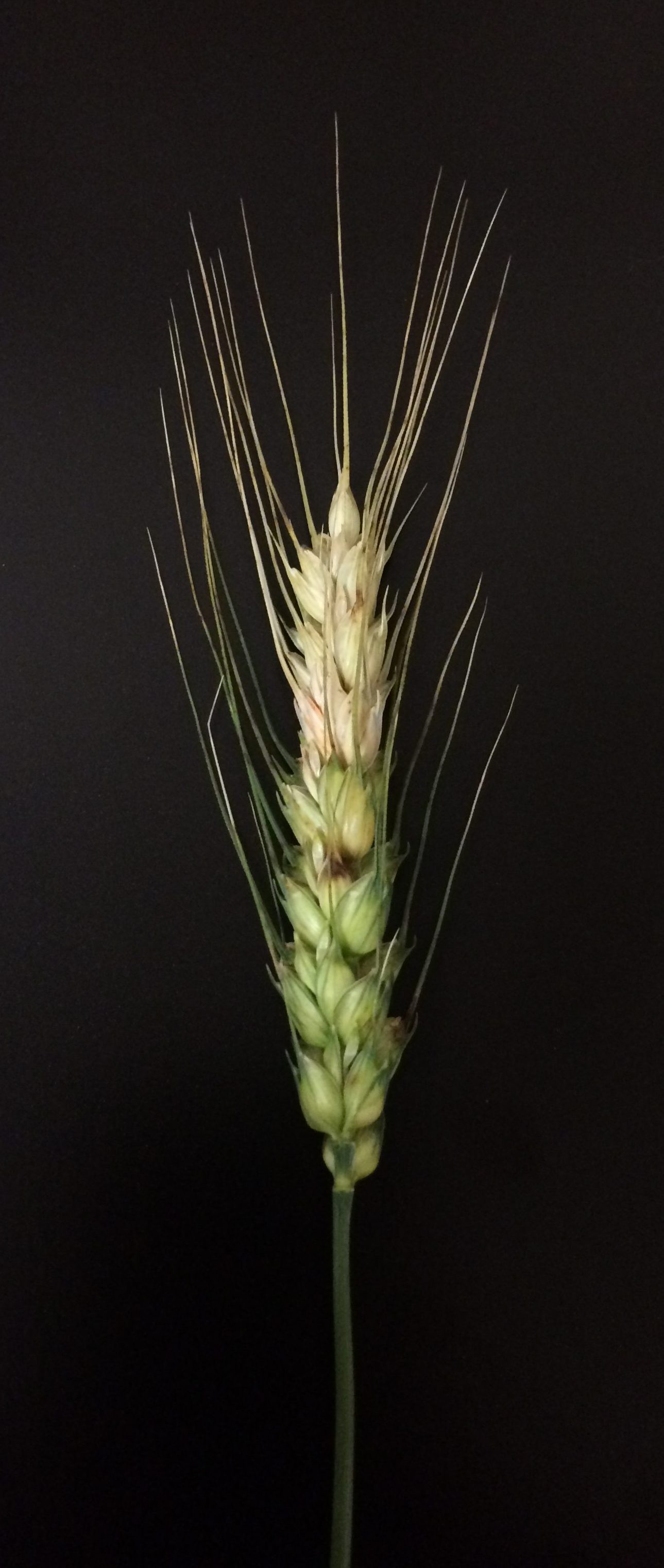
Wheat head with bleached spikelets from FHB
Figure 1. Wheat head with Fusarium head blight. Image: Andrew Kness, University of Maryland

If you grew wheat this year, chances are you don’t have to look too hard to find head scab/Fusarium head blight (FHB). The excessive rainfall, humidity, and warm temperatures that we had around wheat flowering provided the perfect habitat for Fusarium graminearum, the causal agent of FHB, to thrive. If you have FHB, you have few options to manage it at this point in the season as you read in Bob’s article above; but what can you do in 2019 to better your odds (besides hope for little rain during flowering)?

To understand your options you need to understand the lifecycle and biology of F. graminearum. The pathogen survives on residue, particularly that of wheat, barley, and corn and will persist through the winter on this material. During periods of wet, humid, and warm temperatures in the spring, the fungus will produce spores. If wheat or barley is growing in the field, the spores are splashed up onto the heads via rain or irrigation, or carried by the wind. If the wheat or barley is flowering, the spore can germinate and infect the plant through the flower; it cannot get into the plant any other way. This is why we recommend fungicide application at flowering. Once the pathogen infects the wheat, it grows within the spikelet, bleaching it in the process (Figure 1) and infects the developing grain, causing shriveled, light weight, discolored kernels called tombstones. Infected grain may contain deoxynivalenol (DON) vomitoxin. FHB not only reduces yield, but has the potential to contaminate your grain with DON.

With that in mind, here are some tips for managing FHB in 2019:

  • Know your variety! If you plan to grow and market quality grain, then you need to know your varieties. Unlike barley, wheat does have some resistance to FHB, although it is not complete resistance. Some varities are more resistant than others, so my suggestion is to grow a variety that has the best resistance and yield potential. Consult with your seed rep and utilize the data from our wheat variety trials. A collaborative project between the University of Maryland and University of Delaware screens wheat varieties for resistance to FHB. The data can be found here, or call your Extension Office for a copy.
  • Use a fungicide at flowering. Unless we have an exceptionally dry spring, you’ll likely need a fungicide application to protect against FHB. Use the Scab Risk Assessment Tool to help assess your risk. Time your application at the start of flowering (Feekes 10.5.1) and up to 5 days thereafter. Triazole fungicides work best, particularly Caramba (metconazole), Proline (prothioconazole), and Prosaro (prothioconazole + tebuconazole). Do not use strobilurin fungicides! See my article in the April issue for more information on fungicide strategies.
  • New for the 2019 growing season will be a new product from Syngenta, called Miravis Ace (adepidyn). This will be a new mode of action fungicide (SDHI) to be used on FHB, and should help us with managing resistance by rotating it with the Triazoles. Preliminary University testing shows that Miravis Ace does well against FHB; however, claims of a wider application window seems questionable at this point, so application timing will still be critical.
  • Select your best fields. Since F. graminearum can survive on small grain and corn residue, planting wheat or barley behind soybeans is better than following corn. F. graminearum doesn’t survive well on soybean residue. If you are following corn, consider a light tillage pass with a vertical till tool to size residue. This will accelerate residue decomposition, killing some of the surviving F. graminearum.

It is important to utilize as many management strategies as possible for FHB. Host resistance can only provide about 50% FHB suppression in wheat (and 0% in barley), and fungicides can only provide 50% suppression at best. Growers must use a combination of variety selection, fungicides, and cultural practices to achieve a high quality wheat or barley crop.
Fusarium Head Blight (Head Scab) in Small Grain This Year Cause for Concern

Bob Kratochvil, Extension Agronomist
University of Maryland, College Park
rkratoch@umd.edu


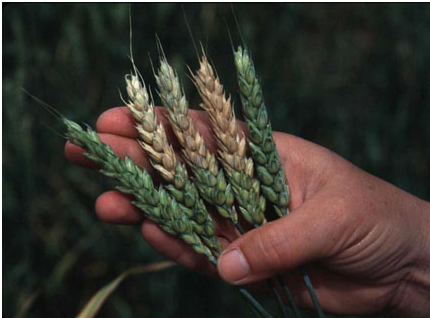
wheat heads infected with Fusarium graminearum
Figure 1. Healthy (outside two heads) and Fusarium head blight diseased wheat heads. Image: APS.net

During the past two weeks, I have had the opportunity to walk a number of small grain fields (wheat, barley, triticale) across the state. Many of those fields are infected with Fusarium head blight (FHB), aka head scab (Figure 1). I have seen fields with very low levels of infection (less than 1% of heads infected) to some that have over 50% infected heads. Thus, the reason for concern. The reason for the high number of infected fields this year is the rainy weather we have had during May. The rains coincided with flowering of the wheat, barley, and triticale. Rain splashes spores of the causal agent of the disease, F. graminearum, onto the heads allowing infection to occur. Temperatures ranging between 75 and 85°F are considered optimum but lower temperatures during periods of high humidity and moisture can also enhance infection. The over 10 inches of rain much of the state has received created ideal infection conditions.

Head scab often results in significant yield loss and grain quality reduction. Grain quality reduction is primarily the result of the mycotoxins (chemicals) that are produced by F. graminearum. These mycotoxins can be toxic for humans and animals if the concentrations exceed minimum limits. The most concerning mycotoxin is deoxynivalenol (DON), also known as vomitoxin. The Food and Drug Administration (FDA) advisory level for DON is 1 ppm for foods consumed by humans. In the case of wheat, the level is 1 ppm for the flour. Often elevators and mills will accept wheat with DON levels 1.5 – 2 ppm without penalty because they can blend infected grain with sound grain to meet the FDA advisory level. Wheat with DON levels that exceed 2 ppm can be acceptable livestock feed. Swine are the most sensitive with the recommended level of 5 ppm DON with the DON infected grain not to exceed 20% of the ration. For ruminants and poultry, grain with 10 ppm DON can be used as long as no more than 50% of the ration is composed of the infected grain.


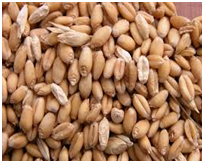
FHB-infected wheat kernels (tombstones)
Figure 2. Healthy and head scab damaged wheat kernels.

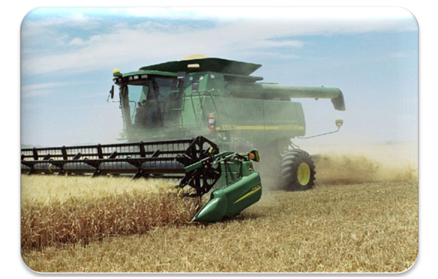
When you harvest your grain and notice shriveled, whitish looking kernels (tombstones), there is a strong likelihood that DON is present (Figure 2). If you have head scab infected wheat or barley fields, you will want to do what you can to minimize the impact of DON that is concentrated in the shriveled tombstone kernels (Figure 2). These light-weight kernels can be separated from sound grain at harvest by increasing the combine’s fan speed so don’t be concerned that you are losing too much good grain if you see lots of tombstones behind the combine, because you are not.

combine harvesting wheat
If you are storing the grain do so properly to prevent further contamination. Dry newly harvested grain that is infected to 13-14 percent moisture. This will stop pathogen growth and mycotoxin production. DON is an extremely stable mycotoxin. This means that drying and properly storing grain will not reduce the DON levels, however, DON concentration will not increase in properly stored grain. Bin any infected grain you harvest separately from sound, good quality grain. If you have a cleaner, you can remove fines from the wheat before you bin it and possibly lower the DON concentration. Before you deliver your grain, I suggest you check with your elevator or mill to see if they test for DON. It will be easier to take samples to them for testing prior to delivery than to learn that your grain is rejected after you have loaded the truck and taken it to the elevator.

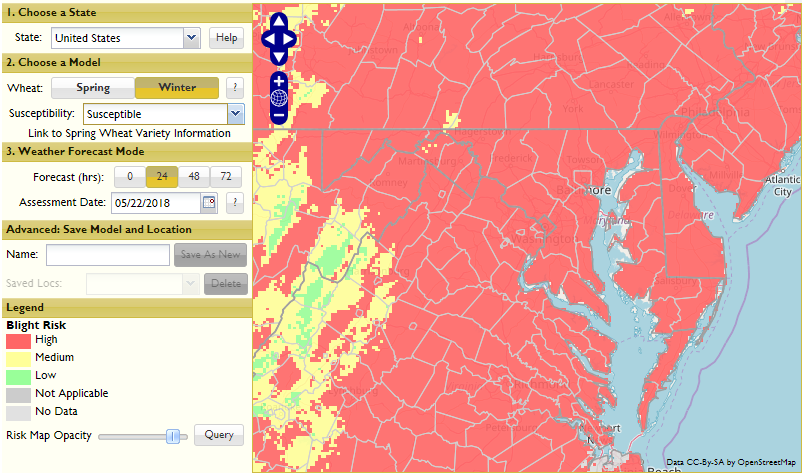
FHB UPDATE: MAY 22, 2018

scab risk map for Maryland on May 22, 2018
24 hour Risk for Fusarium Head Blight development on susceptible wheat varieties (eg Shirley) for May 22, 2018.


With the recent wet period and warm temperatures, FHB risk in the state of
Maryland continues to be very high. Growers having their wheat flowering now
are advised to spray triazole fungicides (Prosaro/Caramba) for FHB. Aerial
application at a rate of 5 gallons per acre or ground application at 15
gallons per acre with 300-350 um droplet size and nozzles angled down 30 to
45 degrees from horizontal is recommended. If flowering has finished,
fungicide spray will not help to reduce FHB and DON contamination of grains.
Do not spray strobilurin-containing fungicides.

–Nidhi Rawat, Small grains Pathologist, University of Maryland

For more details, go to the FHB Risk assessment tool at
http://www.wheatscab.psu.edu

For the latest news and updates from the U.S. Wheat & Barley Scab
Initiative, go to https://www.scabusa.org

Fusarium Head Blight Fungicide Recommendations

By Andrew Kness, Agriculture Extension Educator
University of Maryland Extension, Harford County

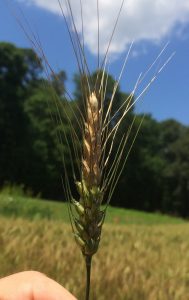
Wheat head infected with Fusarium graminearum
Figure 1. Wheat head with Fusarium head blight, which causes the premature dry-down and bleaching of florets. Image: A. Kness, University of Maryland

As wheat begins to head, growers will be considering fungicide applications for managing head scab/Fusarium head blight (FHB). The Fusarium Risk Assessment Tool (www.wheatscab.psu.edu) is a forecasting model that predicts your risk for developing FHB on your wheat based on the current and predicted weather forecasts. FHB infection is favored by wet weather and high humidity. You should use this tool to help assess your risk for developing FHB as your wheat approaches flowering. Historically, this tool has been about 70% accurate.

Management of FHB should start with seed selection, since fungicides can only achieve about 50% control under the best case scenario; so selecting resistant varieties is crucial for harvesting good quality grain. It should be noted that resistance to FHB in wheat is not complete; therefore, fungicide applications are often needed in order to achieve acceptable management of FHB and suppression of DON vomitoxin. The pathogen that causes FHB can only infect the plant through the flower, so fungicide applications should be targeted between early flowering (Feekes 10.5.1) and 5 days thereafter. Fungicides that are effective on FHB include the triazoles (FRAC group 3 fungicides), which are Caramba (metconazole), Proline (prothioconazole), and Prosaro (prothioconazole + tebuconazole). These fungicides will also do an excellent job on foliar diseases as well, helping to keep the flag leaf clean. Folicur (tebuconazole) is less effective, but provides some suppression of FHB and DON accumulation, but should not be used if FHB risk is high. Over the past few years, Tilt (propiconazole), has become less effective for managing FHB, and is currently providing poor control. Fungicides containing strobilurins (Qoi, FRAC group 11 fungicides and mix-mode of action fungicides) should not be used past flag leaf emergence on wheat because these fungicides can increase DON vomitoxin accumulation in the grain. For barley, fungicide applications should be made at head emergence. Unlike wheat, barley has no resistance to FHB, so if we get a highly favorable year for FHB development, the very best control you can hope to achieve of FHB and DON is about 50% suppression.


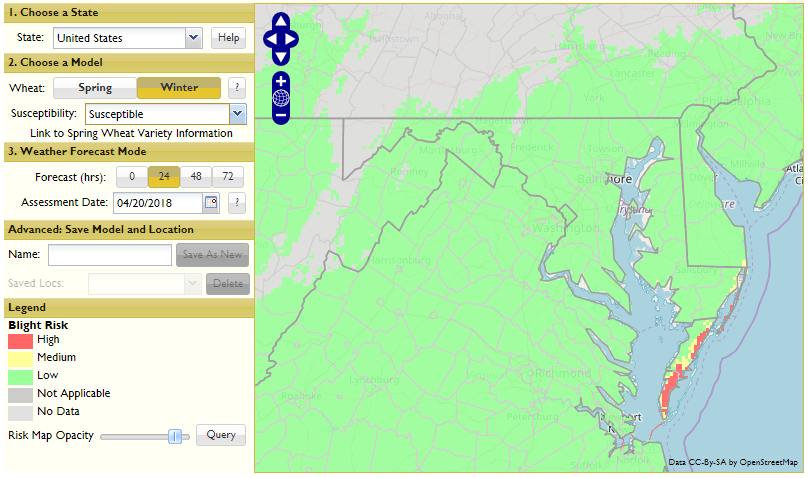
FHB Update: April 20, 2018

Fusarium Risk Assessment Tool, April 20, 2018
24 hour Risk for Fusarium Head Blight development on susceptible wheat varieties (eg Shirley) for April 20, 2018.


Wheat in southern Maryland is either at jointing or booting stage, and
should be heading out in a week or so. Even with the recent showers, the FHB
risk is currently predicted to be low because of the cold temperatures so
far. However, the temperatures are going to increase by next week, so
growers are advised to keep an eye on the FHB risk forecasts. Up in the
north in Frederick, Harford and nearby counties, plants are starting to
joint, and are not at a stage prone for FHB.

–Nidhi Rawat, Small grains Pathologist, University of Maryland

For more details, go to the FHB Risk assessment tool at
http://www.wheatscab.psu.edu

For the latest news and updates from the U.S. Wheat & Barley Scab
Initiative, go to https://www.scabusa.org