April 2022 Grain Market Report

Dale Johnson, Farm Management Specialist
University of Maryland

Information from USDA WASDE report

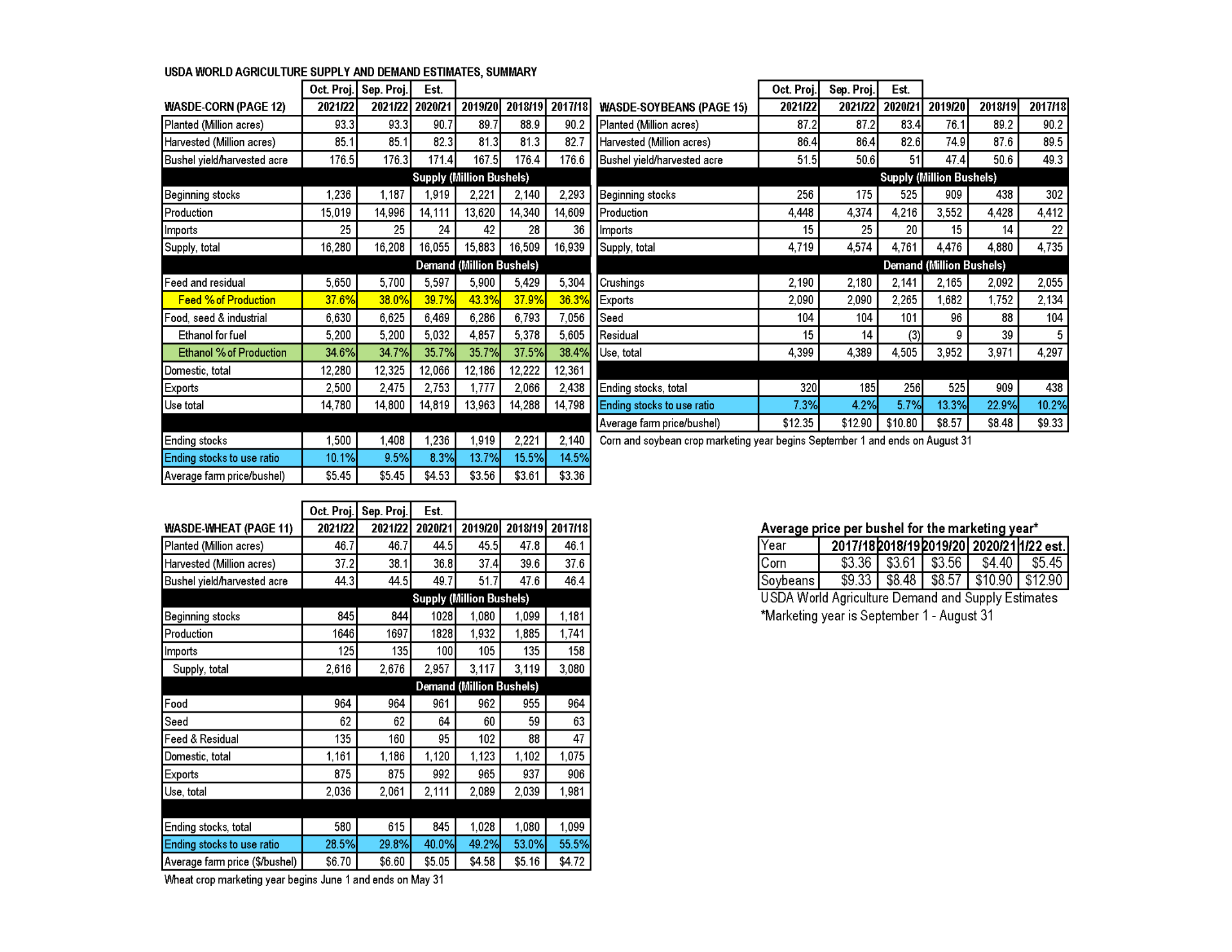
Attached is the summary for the April 2022 WASDE.

Corn

There were no changes on the corn supply side from the March 9 WASDE estimates. On the demand side, there were minor changes but total use and Ending stocks remained the same. Ending stocks are estimated to be 1,440 million bushel, with a stocks-to-use ratio of 9.6%. December 2022 Corn futures remain in a bullish volatile market with prices increasing from $6.37 on March 9 to a high of $7.18 on April 8 as extraordinary world events drive market prices up. A lower than expected prospective plantings report on March 31 pegged planting at 89.5 million contributed to higher prices for the 2022 crop year.

Soybean

There were no changes on the soybean supply side from the March 9 WASDE estimates. On the demand side, export estimates were increased by 25 million bushel, seed was increased by 4 million bushel and the residual estimate was decreased by 3 million bushel. This resulted in a lower estimate of ending stocks at 260 million bushel and a decrease in the stocks-to-use ratio from 6.4% to 5.8%. November 2022 futures prices have been volatile the past month. A higher than expected prospective plantings report on March 31 pegged planting at 91 million contributed to a price dip but has since recovered to a high of $14.98 on April 8.

Wheat

On the supply side, import estimates were decreased by 5 million bushel. On the demand side, Feed & Residual was decreased 10 million bushel. Export estimate was decrease by 25 million bushel. These changes increased the ending stocks by 30 million bushel to 678 million bushel and the stocks to use ratio increased from 33.4% to 35.5%. On March 3 & 7, the market was limit up as trading was halted on those days. The market then went limit down on March 8, 9 , & 10. On March 9 &10 there was no trading. The market has declined since then from the $12.50 range to a high of $10.60 on April 8.

Field Crop Budgets for 2022

Shannon Dill, Principal Agriculture Agent
University of Maryland Extension, Talbot County

The University of Maryland Extension has updated www.go.umd.edu/grainmarketing site with new input data and spray programs for the 2022 field crop budgets.

Crop Budgets

Cost of production is very important when making decisions related to your farm enterprise and grain marketing. Enterprise budgets provide valuable information regarding individual enterprises on the farm. This tool enables farm managers to make decisions regarding enterprises and plan for the coming production year. An enterprise budget uses farm revenue, variable cost, fixed cost and net income to provide a clear picture of the financial health of each farm enterprise.

The 2022 Maryland enterprise budgets were developed using average yields and estimated input cost based upon producer and farm supplier data. There has been a lot of fluctuation in fertilizer prices, pesticide availability and fuel expenses. The figures presented are averages and vary greatly from one farm and region to the other. Therefore, it is crucial to input actual farm data when completing enterprise budgets for your farm.

How to Use University Enterprise Budgets

Enterprise budgets can be used as a baseline for your operation. Make changes to these budgets to include your production techniques, inputs and overall management. New spray programs were added for herbicide resistant weeds.

The budgets are available electronically in PDF or Excel. Use this document as a start or reference to create your crop budgets. If you have problems downloading any of these budgets, contact information is located on the website.

Average Cost Per Acre, 2022 
Year Corn

No Till

Corn

Conventional

Full Season

Soybeans

Wheat Double Crop

Wheat/Beans

2021 $540 $592 $346 $401 $608
2022 $698 $749 $402 $490 $749
Percent Change +29% +26% +16% +22% +23%

March 2022 Grain Market Report

Dale Johnson, Farm Management Specialist
University of Maryland

Information from USDA WASDE report

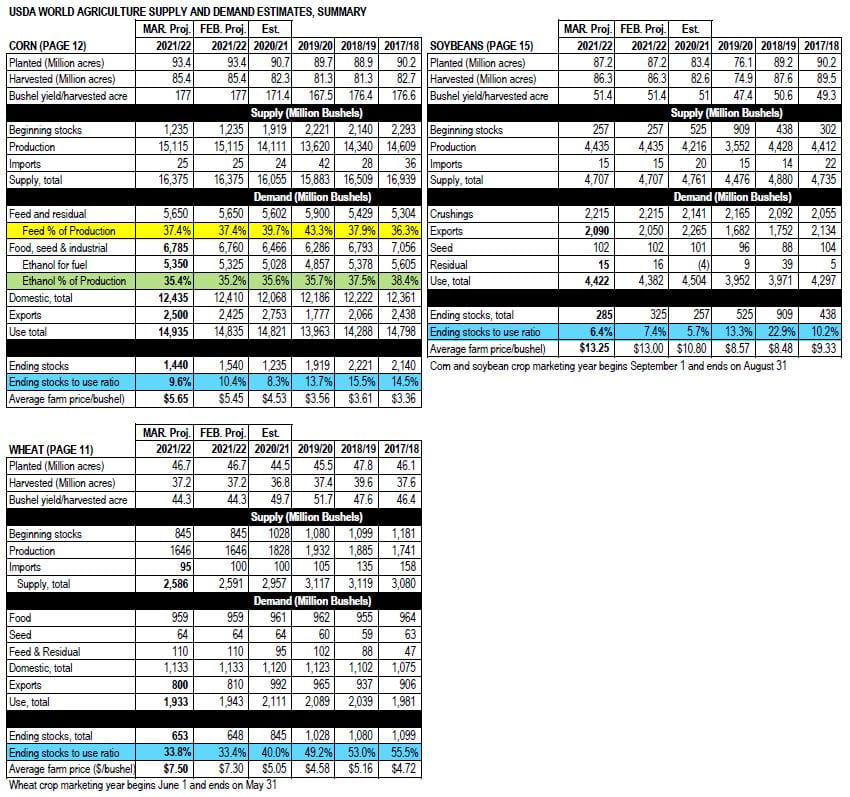
Attached is the summary for the March 2022 WASDE.

Corn

There were no changes on the corn supply side from the February 9 WASDE estimates. On the demand side, ethanol estimates increased 25 million bushel and esports increased 75 million bushel for a total demand increase of 100 million bushel. Ending stocks are estimated to be 1,440 million bushel, decreasing the stocks-to-use ratio from 10.4% in February to 9.6% in March. March 2022 Corn futures increased from $6.47 on February 9 to peak at $8.00 on March 4 and settle back to $7.45 March 9 as extraordinary world events drive market prices up.

Soybeans

There were no changes on the soybean supply side from the February 9 WASDE estimates. On the demand side, export estimates were increased by 40 million bushel and the residual estimate was decreased by 1 million bushel. This resulted in a lower estimate of ending stocks at 285 million bushel and a decrease in the stocks-to-use ratio from 7.4% to 6.4%. March 2022 futures price increased dramatically from $15.95 on February 9 to peak at $17.65 on February 24 and settle back to $16.87 on February 9 as extraordinary world events drive market prices up.

Wheat

On the supply side, import estimates were decreased by 5 million bushel. On the demand side, export estimates were decreased 10 million bushel. These changes increased the ending stocks by 5 million bushel to 653 million bushel and the stocks to use ratio increased from 33.4% to 33.8%. However, extraordinary world events drove March futures from $7.85 on February 9 to peak at 14.25 on March 7. On March 3 & 7, the market was limit up as trading was halted on those days. The market then went limit down on March 8, 9 , & 10. On March 9 &10 there was no trading. The market went limit down at the opening. On March 11 the market closed at $10.90 after the wildest ride in history.

February 2022 Grain Market Report

Dale Johnson, Farm Management Specialist
University of Maryland

Information from USDA WASDE report

Attached is the summary for the February 2022 WASDE.

Corn

There were no changes in corn estimates from the January 12 WASDE report to the February 9 WASDE report. Ending stocks are estimated to be 1,540 million bushel with a stocks to use ratio of 10.4%. March 2022 Corn futures increased from $5.99 on January12 to peak at $6.45 on February 9 at the time of this report.

Soybeans

There were no changes in supply estimates. On the demand side, the estimate for crushings was increased by 215 million bushels. This resulted in a lower estimate of ending stocks at 325 million bushel and a decrease in the stocks-to-use ratio from 8.0% to 7.4%. March 2022 futures price increased dramatically from $13.99 on January 12 to peak at $15.97on February 9 at the time of this report- OH! so close to $16.00 beans!

Wheat

On the supply side, there were no changes in the estimates from January to February. On the demand side, Food estimate was decreased by 3 million bushel. Seed estimate was decreased by 2 million bushel. Export estimate was decreased by 15 million bushel. These changes increased the ending stocks by 20 million bushel to 648 million bushel and the stocks to use ratio increased from 32.0% to 33.4%. March futures increased from $7.58 on January 12 to peaked at 8.32 on January 25 but have since backed off to trade at a high of $7.88 pm February 9 at the time of this report.

January 2022 Grain Market Report

Dale Johnson, Farm Management Specialist
University of Maryland

Information from USDA WASDE report

Attached is the summary for the January 2022 WASDE.

Corn

2021/22 harvested acres estimate was increased by 300,000 acres which increased production and supply estimate by 52 million bushel. On the demand side there were minor adjustments with the net effect of a demand estimate increase of 5 million bushel. The result of these supply and demand estimates was an increase in ending stocks of 47 million bushels increasing the stocks-to-use ratio to 10.4% from 10.1 in December. March 2022 futures increased from $5.92 on December 9 to peaked at $6.18 on December 28 and close at $5.99 on January 12.

Soybeans

There were minor adjustments in soybean supply and demand estimates resulting in an increase of ending stocks estimate of 10 million bushels and an increase in the stocks-to-use ratio from 7.8% to 8.0 %. January 2022 futures price increased dramatically from $12.65 on December 9 to close at $13.91 on January 12.

Wheat

On the supply side, wheat import estimate was decreased by 10 million bushel. On the demand side, Feed and Residual estimate was decreased by 25 million bushel and export estimate was decreased by 15 million bushels. The net effect of supply and demand adjustments was an increase in ending stocks of 30 million bushel. The stocks-to-use ratio increased from 29.9% to 32%. December futures decreased from $7.77 on December 9 to $7.58 on January 12.

Register For The 2022 Virtual Agronomy Meeting

10 a.m. – 2:30 p.m.

This meeting will cover timely topics related to corn, soybean, and small grain production in Maryland. Hear from University of Maryland and other regional experts covering topics, such as:

  • Weed management with a limited toolbox
  • Hedging your bets to maximize profitability of fungicides on corn and soybeans
  • Agriculture leasing and agriculture law update
  • Corn nitrogen use following cover crops
  • Soil fertility and 4R

This meeting satisfies credits for pesticide applicator and nutrient management voucher renewals.

Register online: https://go.umd.edu/virtualagronomymeeting

October 2021 Grain Market Report

Dale Johnson, Farm Management Specialist
University of Maryland

Information from USDA WASDE report

Attached is the summary for the September 2021 WASDE.

Corn

2021/22 yield estimate was increased by 0.2 bushel per acre. The beginning supply estimate was adjusted up 49 million bushel. The net effect of these adjustments on estimated supply was an increase of 72 million bushel. On the demand side there were minor adjustments with the net effect of a decrease of 20 million bushel. The result of these supply and demand estimates was an increase in ending stocks of 92 million bushels and an increase in the stocks to use ratio from 9.5% to 10.1%. December futures peaked at $5.49 on September 30 but settled back at $5.22 on October 12.

Soybeans

2021/22 yield estimate was increased by 0.9 bushel per acre . The beginning supply estimate was adjusted up by 80 million bushel. Imports were adjusted down 10 million bushel. The net effect of these adjustments on estimated supply was an increase of 145 million bushel. Crushings were adjusted up 10 million bushels and residual was adjusted up 1 million bushel. The Net effect of all adjustments was an increase of 135 million bushels in ending stocks and increase in the stocks to use ratio from 4.2% to 7.3 %. November futures prices on June 10 closed at $14.59. November futures peaked at $13.08 on September 16 and  trended down to settle at $11.98 on October 12.

Wheat

There were small adjustments and demand and supply categories resulting in a net effect of a 35 million bushel decrease in ending stocks decreasing the ending stocks-to-use ratio from 29.8% to 28.5%. December futures peaked at $7.64 on October 4 then declined to settle at $7.34 on October 12.

Maryland Regional Crop Reports: October 2021

Crop reports are for conditions up to October 8, 2021.

Western Maryland

The weather has remained kind to us here in Washington County. We have had welcome rains that have been gentle in their nature. Soil moisture is at its optimum for fall planting. Early soybeans and corn harvest has begun, yields have yet to be reported. Most corn silage has been harvested and planting of winter annuals has begun. Additionally, wheat seeding will soon commence.  —Jeff Semler, Washington Co.

Central Maryland

As I write this, it is lightly raining here at the Montgomery County Extension Office. Corn grain harvest is in full swing. I have not seen any soybean fields come off yet. Corn yields have varied depending on location and summer rainfall, but have overall been close to or slightly above average.—Kelly Nichols

Northern Maryland

Conditions have been ideal for corn harvest. Corn harvest started around the second week of September and is now in full swing. Yields are variable but most fields are running average to above average. A few acres of early soybeans have been harvested; double crop soybeans continue to look very strong. We’ve had good soil conditions for cover crop, small grain, and pasture seeding.—Andy Kness, Harford Co.

Upper & Mid Shore

Corn and soybean harvest is moving along smoothly, with the exception of lines at the granaries. It takes time to deliver high yields to market. We are setting records in both bean and corn yields. Farmers are reporting yields that they have never seen before! Soil moisture is adequate throughout the region with the few dry and wet spots. Cover crops are off to a great start. Troublesome weeds like glyphosate-resistant common ragweed and palmer amaranth are really showing up as beans are drying and the weeds are still green. Remember those fields for next year.—Jim Lewis, Caroline Co.

Lower Shore

The harvest season is progressing with no major problems. Corn is approximately 60% harvested. Soybean is drying down and ready to start harvest within the next week if the weather cooperates. Wheat and barley planting will begin soon. However, the ground is harder than desired at the moment due to lack of rain. Cover crop planting is going well; we have had significant acreage aerially seeded and ground planting has begun.—Sarah Hirsh, Somerset Co.

Southern Maryland

Conditions have been favorable for good progress on corn harvest. Yields are very good to excellent in most areas. Full season soybeans are mature and drying down. Some farmers started harvesting early-planted full season beans last week. Double crop soybeans are also looking very good. Vegetable harvest is winding up. The pumpkin and cucurbit crop is coming off now, with a decent pumpkin harvest this year. We did receive a report of alfalfa with second infestation of fall armyworm, assuming the next generation is now active.—Ben Beale, St. Mary’s Co.